WiiM Ultra vs Bluesound Node (and Node Icon): What $420 More Buys
Two streamers, one of them more than twice the price, and a feature list that overlaps so heavily you have to look hard to find daylight. The gap is real, but it is not where the spec sheets suggest. You are not buying more streaming. You are buying software that has been maintained for a decade and a voicing that leans warm, and whether those are worth $420 depends on questions nobody puts on a comparison table.
Matt · · 4 min read
The honest version of this comparison
The WiiM Ultra is $329. The Bluesound Node (N132) is $749. The Node Icon is $1199.
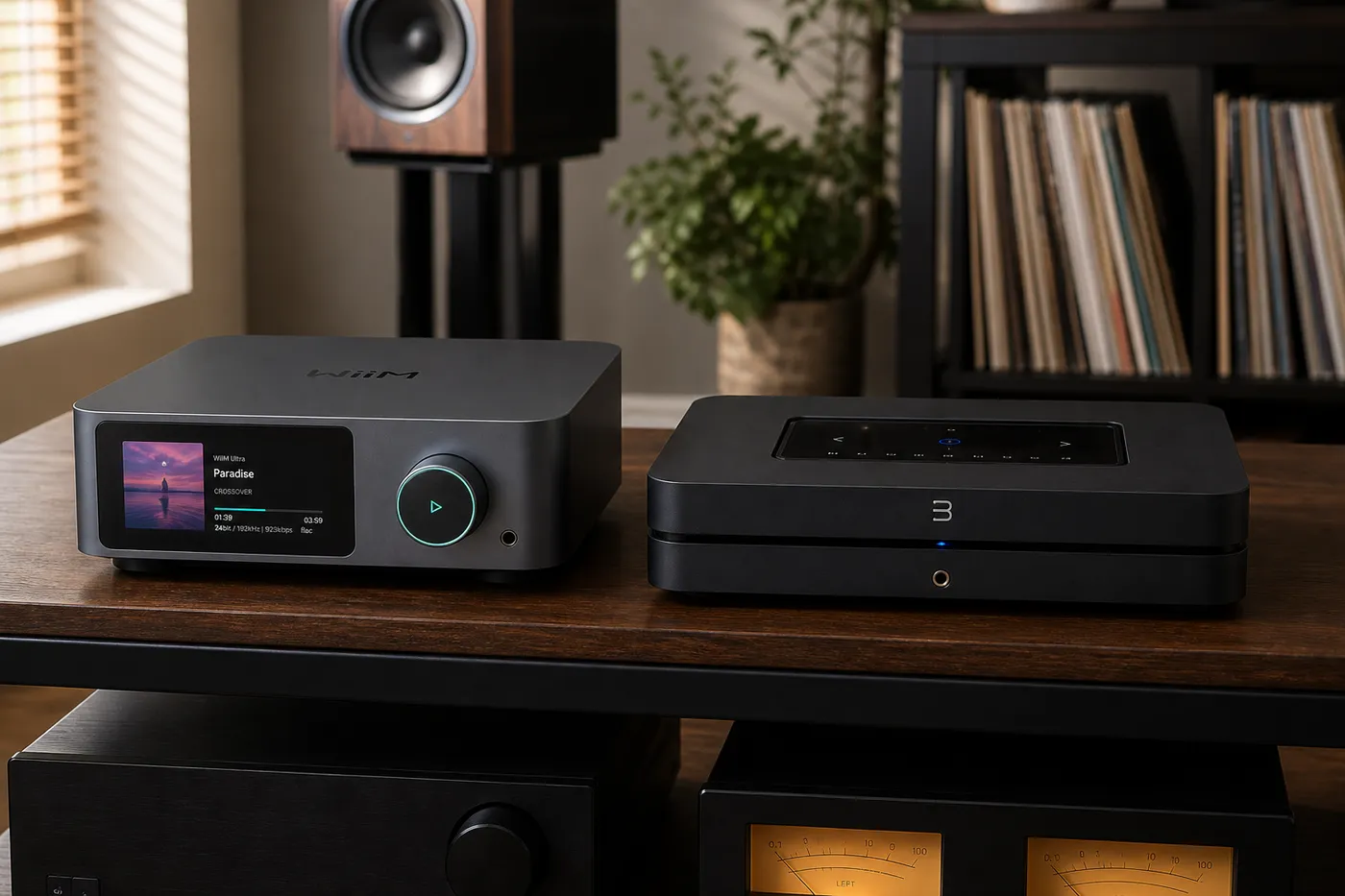
Put the feature lists side by side and the WiiM looks absurd. It has a 3.5-inch touchscreen, a phono input, HDMI ARC, a headphone output, a subwoofer output, room correction, Wi-Fi 6, and an ESS ES9038 Q2M DAC. The Node has HDMI eARC, a combination analog and optical input, and a subwoofer output. On paper the cheaper box does more.
Paper is not the whole story here, and I want to be careful not to pretend it is.
What Bluesound is actually selling
BluOS is the product. This is the part that does not show up in a spec comparison and drives most of the price difference. Bluesound has been developing BluOS for over a decade, and it shows in the places that only reveal themselves after months of ownership: indexing a large local library without falling over, running eight rooms in sync, and not breaking when a firmware update lands.
WiiM’s app has improved enormously and it is genuinely good now. It is not ten years of accumulated edge cases handled. If you have a 40,000 track NAS library, that difference is your whole experience. If you stream Tidal to one system, you will likely never find it.
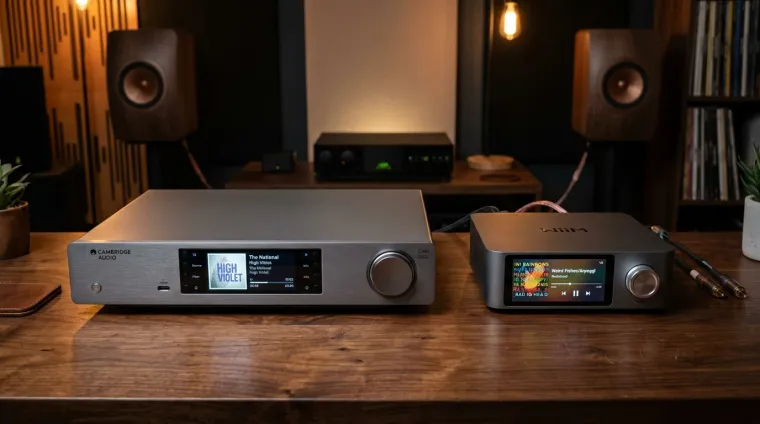
The voicing is different, and reviewers are consistent about the direction.Audio T ran the Ultra against both Nodes directly, and the pattern that comes back repeatedly across reviews is that the Node presents warmer and the WiiM more neutral. ecoustics found the current N132 more open and tighter in the bass than the outgoing model, with less of the soft warmth that characterised earlier Nodes, which suggests Bluesound is moving toward the middle.
Warmer is not better or worse. It is a preference, and it is one you should audition rather than read about. If your speakers are already bright, the Node’s presentation may be exactly what fixes your system. That is a real reason to spend the money and it has nothing to do with capability.
Where the WiiM genuinely wins
Room correction. The Ultra has it built in and the Node does not. I keep returning to this because it is the single feature most likely to improve what you hear, more than any streamer swap at any price. Correcting a modal peak in your room is a bigger audible change than the difference between these two boxes. If you have not measured your room yet, start there before you shop.
The phono input. Nothing in the Node range has one. If you own a turntable without a built-in stage, the Ultra absorbs a component the Node makes you buy.
The screen. Album art and a VU meter on the unit itself. The standard Node has no display at all, which is a strange omission at $749. The Node Icon does.
Price, obviously. The $420 you keep buys a lot of room treatment, a UMIK-1 and a mic stand, or a meaningful chunk of a better DAC.
The Node Icon is a different question
At $1199 the Icon is not really competing with a $329 streamer, and treating it as the same comparison does it a disservice. It adds a front display, a stronger headphone stage, and a better DAC implementation over the standard Node.
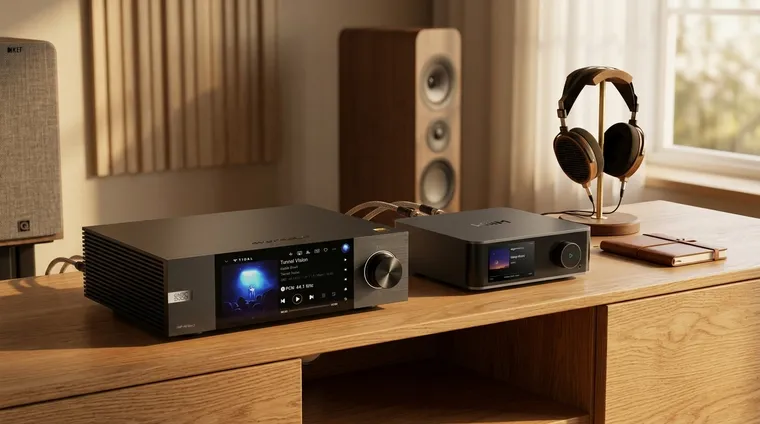
The Icon is aimed at someone building a system where the streamer is a destination component rather than a source feeding something better. If you are running it straight into power amplifiers or active speakers with no separate DAC or preamp, the Icon’s internals are doing all the work and the money goes somewhere audible.
If you are feeding an external DAC, you are paying $1199 for a transport, and a $329 transport sends identical bits. That is the whole calculus, and it is uncomfortable for the expensive end of this category.
So which one?
You have a large local library, or you want multiroom across the house: Node. BluOS is the reason, and it is a good one.
You want the most capability per dollar in one room: WiiM Ultra. It is not close.
Your system sounds bright and you want to warm it up: audition the Node. Voicing is a legitimate reason to spend more, but audition rather than trust a review.
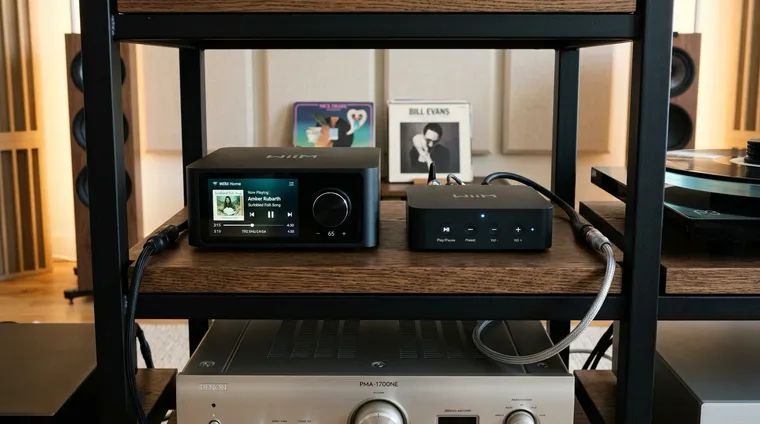
You are feeding an external DAC: WiiM Ultra, or the Pro Plus below it. You are buying a transport; do not overpay for one.
The streamer is your DAC, preamp, and headphone amp all at once: Node Icon. That is the case its price actually fits.
I own the Ultra and I recommend it constantly, but I want to be straight about the limits of that recommendation. The WiiM wins the spec sheet decisively and wins the value argument outright. Bluesound wins on software maturity, and software maturity is the thing you notice in year three, not week one. Both of those are true, and which one governs your purchase depends on how much music you own rather than rent.
Is the Bluesound Node worth more than double the WiiM Ultra?
It is if you want BluOS, which handles large local libraries and whole-home multiroom better than WiiM's app, or if you prefer a warmer presentation. If you stream from Tidal or Spotify to one system and want maximum features per dollar, the WiiM Ultra covers the same ground for $329.
What is the difference between the Bluesound Node and Node Icon?
The Node Icon sits above the standard Node at $1199 against $749, adding a better DAC implementation, a front display, and a more capable headphone stage. Both run BluOS. The Icon is Bluesound's flagship streamer, and the standard Node is the middle model between it and the Node Nano.
Does the WiiM Ultra sound as good as the Bluesound Node?
They are voiced differently rather than separated by a wide quality gap. Reviewers consistently describe the Node as warmer and the WiiM Ultra as more neutral. Both measure well past audibility, so if you feed an external DAC from either one, the difference largely disappears.