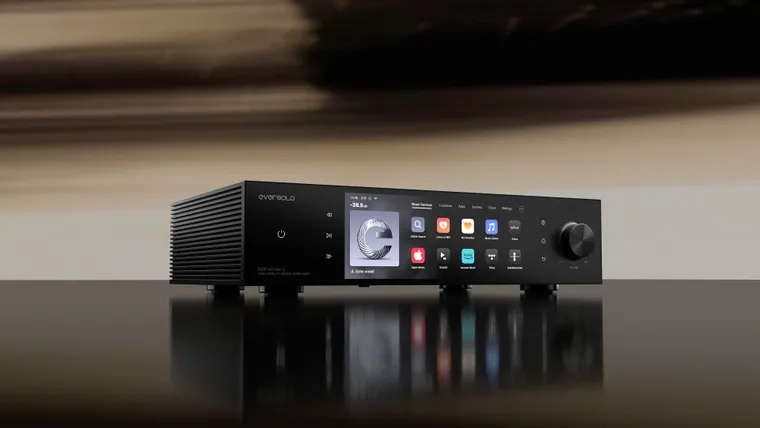
Eversolo DMP-A8 Gen 2 First Look: Specs, Price, Take
Eversolo DMP-A8 Gen 2 and Master Edition Gen 2: what changed vs the original A8, US and UK pricing, vs DMP-A6 and WiiM Ultra. I have not heard either Gen 2 box.
Shanling put its SCD3.3-derived discrete R2R DAC into a full Android streamer with a 5.98-inch 2K screen. Available now at $1699 / £1799. I have not heard one. This is the sheet, the field it lands in, and why I want to get it in for a proper listen.
Heard / not heard: I have not heard the Shanling SM1.3R HD. Nothing below is a listening report. I have lived with a Chord Qutest (FPGA) and a WiiM Ultra. Takes on R2R versus that Chord stack are my view of the architectures, not impressions of this box.
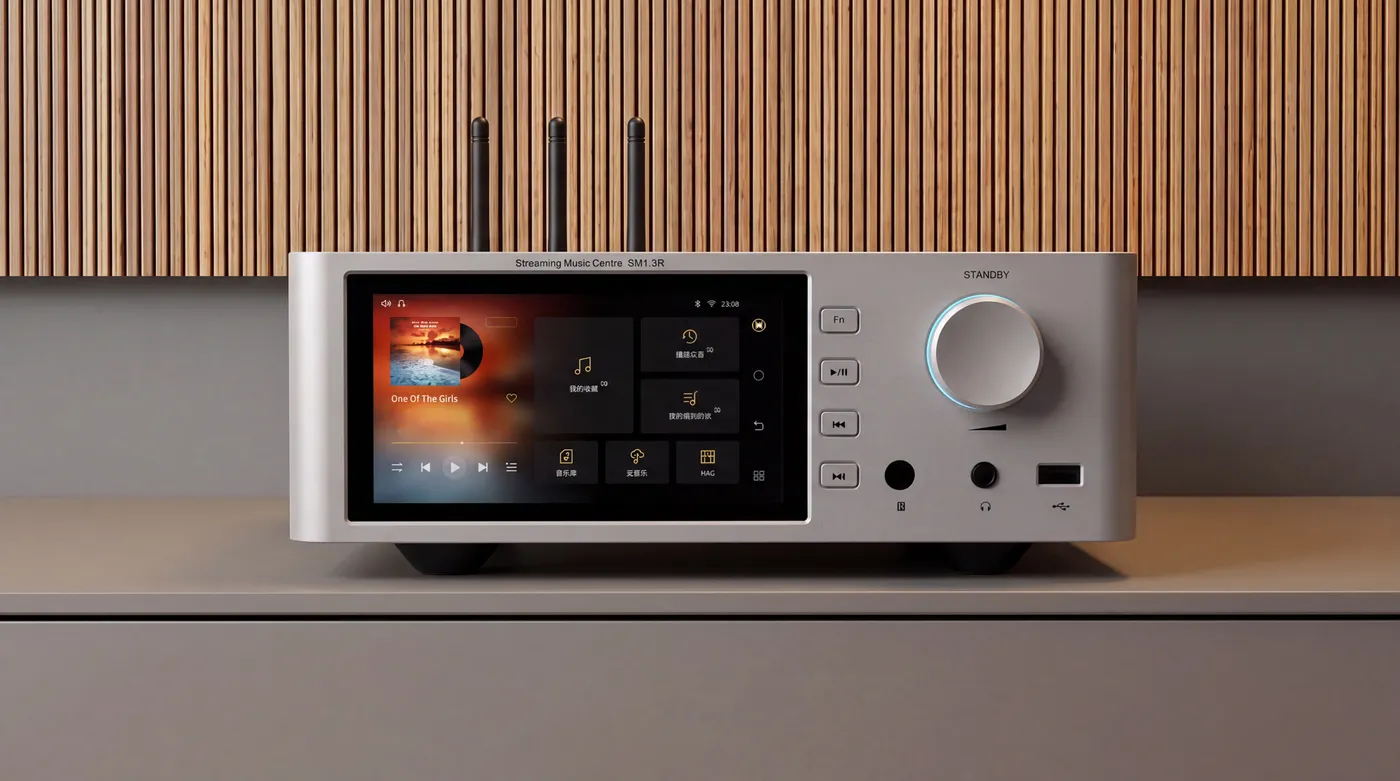
Shanling’s SM1.3R HD landed on 29 October 2026 as a network streamer, DAC, and headphone amp in one chassis. The headline change versus earlier SM1.3-family players is conversion: an in-house discrete R2R ladder drawn from the SCD3.3 SACD player, instead of a bought-in chip. What Hi-Fi? and Shanling’s Starscream press release both put street pricing at $1699 / £1799, black or silver, available now. Shanling’s English product page and store listing match the $1699 figure.
That is enough to write a first look. It is not enough to tell you how it sounds.
A square-ish aluminum streamer with a 5.98-inch, 2560 x 1440 touchscreen, Android underneath, physical transport keys, a volume knob with a standby ring, front 6.3mm headphone out, and three antennas on the back. Dimensions from the press kit: 280 x 280 x 110 mm, 6.4 kg.
Conversion is Shanling’s second-generation Kunlun Pro R2R assembly: a 24-bit resistor ladder using 212 precision resistors rated at 0.01% accuracy, with the company promising a “natural and analogue-like” character. Power is twin 31 W toroidal transformers, digital and analogue on separate linear supplies. That pairing (discrete R2R plus dual linear iron) is the product story. Everything else is the feature list that has to keep up with Eversolo and friends.
| Shanling SM1.3R HD | |
|---|---|
| Price | $1699 / £1799 |
| Role | Streamer, R2R DAC, headphone amp |
| DAC | In-house discrete R2R (Kunlun Pro / SCD3.3 lineage) |
| Power | Twin 31 W toroidal linear supplies |
| USB max | 32-bit / 768 kHz, DSD512 |
| Other digital in | Coax and optical to 24-bit / 192 kHz |
| Analogue out | RCA (2.2 V) and XLR (4.4 V) |
| Digital out | Coax, optical, USB, I2S (transport mode) |
| Headphone | 6.3mm, selectable gain; high gain claimed 900 mW into 32 Ω |
| Screen | 5.98 in, 2560 x 1440 |
| Storage | 64 GB internal + M.2 SSD slot (external USB up to 2 TB claimed) |
| Network | Wi-Fi 6, gigabit Ethernet, Bluetooth 5.2 with LDAC / aptX Adaptive / aptX HD |
| Streaming | Tidal Connect, Qobuz Connect, Apple Music, Amazon Music, Spotify, Roon Ready, DLNA, AirPlay 2 |
| Platform | Android on a Rockchip CPU, 4 GB RAM |
USB is the only path that unlocks the full PCM and DSD ceilings. Coax and optical stay at 24/192, which is normal for S/PDIF and still more than enough for almost every file people actually stream. Digital outs mean you can treat it as a transport into another DAC if the R2R experiment is not your thing. That is useful on paper for someone like me who already trusts a separate converter.
What Hi-Fi? immediately put it against the Arcam ST25, their current Award winner in the streamer class. I have not heard the ST25. On role alone, that is the British chip-DAC / streamer benchmark Shanling has to beat for magazine ink, not a listen I can report.
Closer to pages already on this site:
So the SM1.3R HD is not competing with my Ultra on price. It is competing with mid-premium all-in-ones on features, and pitching R2R as the reason to pick it over another ESS or AKM box.
This is the only place I have standing, and it is still not a listen of the Shanling.
I converted on a Chord Qutest for years, and I still do. Chord does not buy a DAC chip. It runs Rob Watts’ filter on an FPGA with a huge tap count. The house sound I hear there is natural, staged, and detailed without going clinical. That is why I stopped shopping after the Qutest demo, and why the Chord ladder pages on this site keep circling the same point: the conversion approach is the product.
Discrete R2R is a different bet. Instead of a programmable filter reconstructing the waveform, you get a ladder of precision resistors switching bit weights. Brands that sell it usually talk the same language Shanling is using here: natural, analogue-like, less “digital.” Sometimes that is a real voicing people prefer. Sometimes it is marketing pasted on average measurement. You cannot tell which from a press PDF.
My view, as someone who already chose FPGA over commodity chips:
None of that predicts whether the SM1.3R HD is good. It explains why the architecture is on my radar.
No published long-term listen of this exact HD model was on the desk when this page went up. Early coverage is launch copy. Until someone lives with it, treat these as open questions:
Yes. For this site, specifically.
The stack I already trust is WiiM as transport duties and Chord FPGA as conversion. A $1699 Shanling with discrete R2R, twin linear supplies, XLR, local storage, and the current Connect/Roon/Apple checklist is the cleanest way to put a different conversion philosophy in front of the same KEF LS50 Metas without building a second rack of separates. If it is merely fine, that is still useful reporting. If it is clearly different from the Qutest in a way I can describe after weeks, that is the kind of first-hand page this site is short on.
I have not heard it. I want to.
Eversolo DMP-A8 Gen 2 and Master Edition Gen 2: what changed vs the original A8, US and UK pricing, vs DMP-A6 and WiiM Ultra. I have not heard either Gen 2 box.
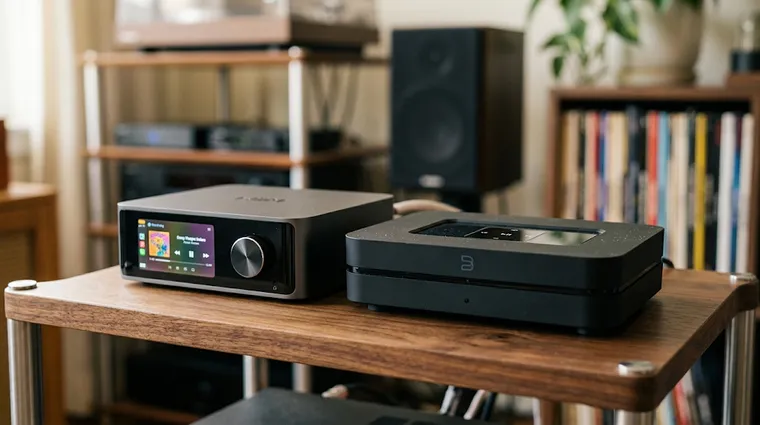
Bluesound added Apple Music to BluOS this week. I own a WiiM Ultra. I have not used a Node with Apple Music. Here is what the native path supports, what AirPlay still does, and who should care.
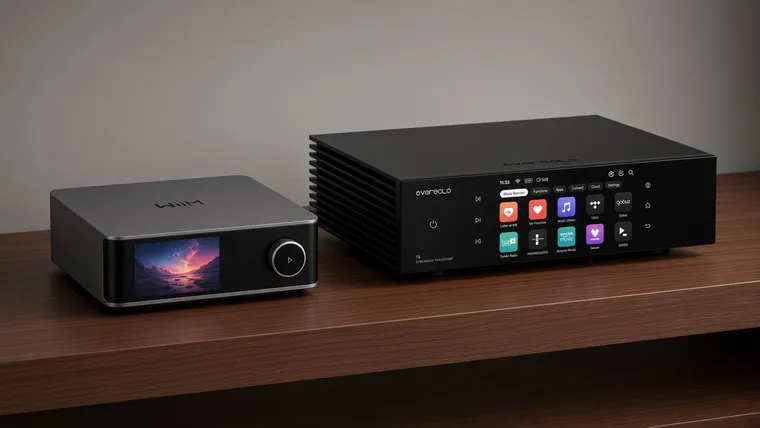
I feed a Chord Qutest from a WiiM Ultra. The Eversolo T8 is a $1,380 streaming transport with no DAC inside. What the extra money buys, what it does not, and who it is for. I have not heard the T8.