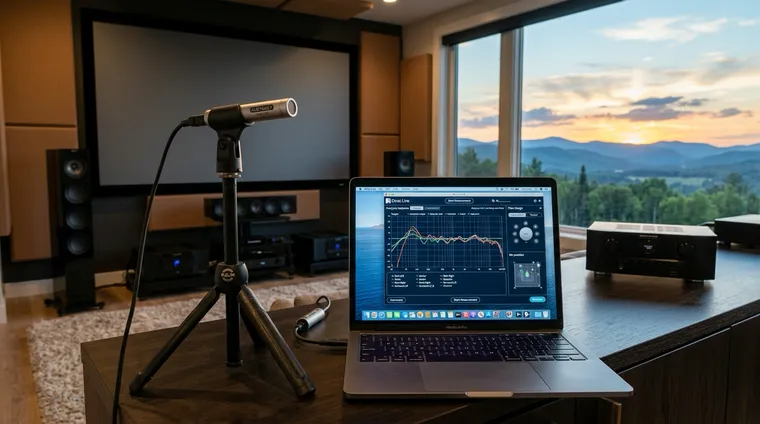
Audyssey vs Dirac Live: Is the Upgrade Worth $349?
Audyssey came free with your receiver. Dirac Live costs $259 to $349 on top. Here is what the money actually buys, which rooms need it, and when Audyssey XT32 is already enough.
Improve any listening space in minutes with HouseCurve, WiiM Auto EQ, Dirac Live ART, Audyssey, ARC Genesis & more, no acoustic math required.
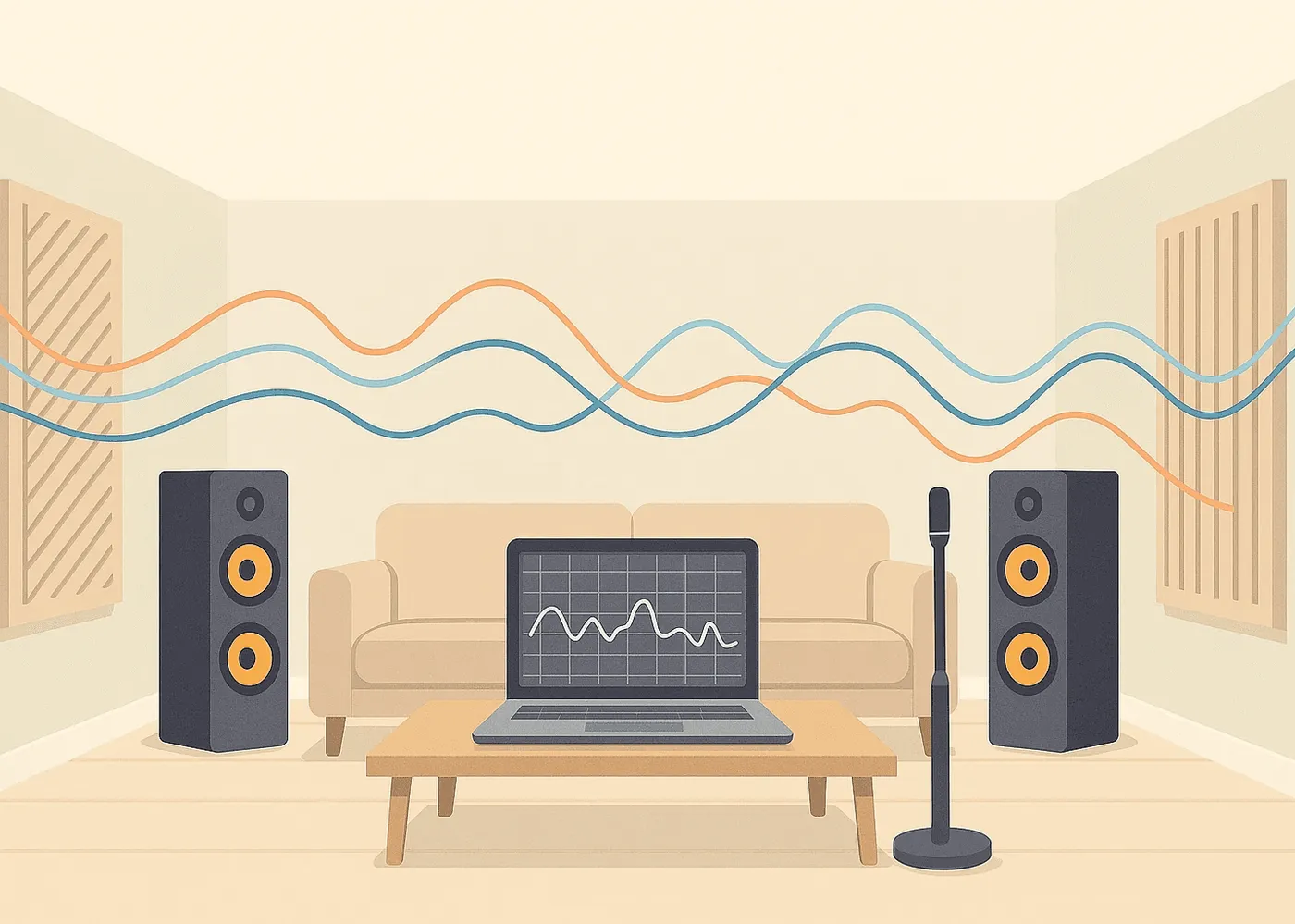
Even the best speakers can’t outrun bad acoustics. (Not sure whether your problem is the room or the gear? The gear advisor asks about both and tells you which one to spend on.) Bare floors, hard furniture and off‑axis reflections create peaks, nulls and smearing that no amplifier upgrade will cure. The good news? Modern DSP software can flatten bass modes, dial in phase alignment and apply a gentle “house curve,” all without stacks of fiberglass panels, or an engineering degree. This guide walks you through the easiest, most affordable paths to better sound, from phone‑only apps to the cutting‑edge Dirac Live Active Room Treatment (ART) rolling out later this year. (dirac.com)
TL;DR, If you can run a sweep tone from your phone, you can tune your room.
Pro tip, Enable HouseCurve’s “Target Tilt” for a gentle -1 dB/octave downward slope; listeners tend to prefer a slight bass lift over ruler‑flat.
If you want deeper bass control, stereo/AVRs from Denon, Marantz, Anthem and others unlock more taps, phase linearisation and multi‑sub optimization, jump to §2 and §3.
| Feature | Dirac Live Bass Control | Dirac Live ART (New) |
|---|---|---|
| Correction Range | 20-500 Hz | 20 Hz-room’s Schröder freq |
| Processing | Per‑speaker | MIMO phased array |
| Mic Positions | 9 | 17 (recommended) |
| Cost | $349 licence | $259 add‑on (H2 2025 rollout) |
Dirac’s Active Room Treatment treats your entire speaker set as a coherent array. Instead of simply flattening each channel, ART manipulates inter‑speaker phase to cancel room modes and reduce decay time by up to 10 dB below 500 Hz. Early beta testers report “sub‑like” weight from stand‑mount monitors and faster bass decay times (≤300 ms) even in untreated living rooms. (dirac.com, audioxpress.com, dirac.com)
Availability, Denon & Marantz models that already support Dirac Live Bass Control should gain ART via firmware in H2 2025. Expect similar licencing for NAD and StormAudio soon after.
Setup at a Glance
CPU overhead? A single SHARC core at 96 kHz; most 2023‑era AVRs qualify.
A pro‑grade PC app that unlocks unlimited filter taps, per‑channel target curves and phase editing on Denon/Marantz gear. Perfect if you want granular control but can’t justify Dirac’s licence. (audyssey.com, audyssey.com)
Owners of Anthem, MartinLogan and Paradigm products get a surprisingly deep toolset, incl. per‑speaker max‑correction frequency and automatic phase alignment. Latest 1.6.x build refines phase correction for <80 Hz crossovers. (anthemarc.com, anthemarc.com)
Zero‑cost Room EQ Wizard plus a $125-$300 miniDSP 2×4 HD or Flex opens true 64‑bit FIR convolution, dual‑sub integration and automatic delay calibration. Plan on 30 minutes of learning curve, but unmatched flexibility if you switch speakers often. Torn between the free and paid routes? I compare them head to head in REW vs Dirac Live.
Remember: Digital correction is most effective after basic treatments, think rugs, curtains and bookshelves that break up early reflections.
Audyssey came free with your receiver. Dirac Live costs $259 to $349 on top. Here is what the money actually buys, which rooms need it, and when Audyssey XT32 is already enough.
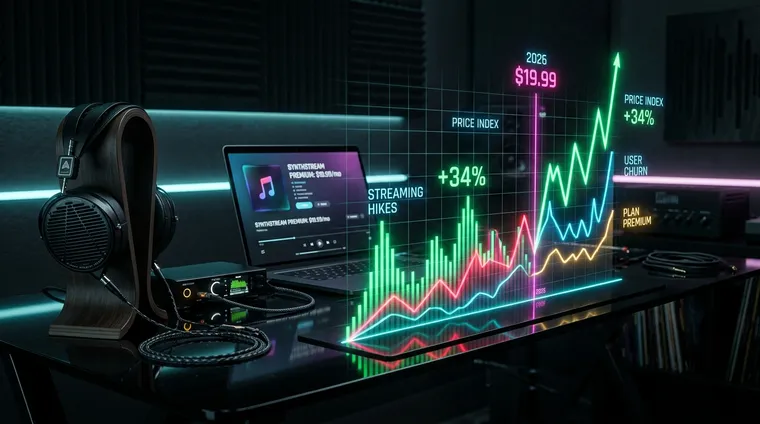
Spotify, Apple Music, Amazon, and YouTube Music all raised US prices in 2026, and Tidal is next. Here is what each service costs now, what you get for the money, and who the hikes make the worst buy.

Dirac ART uses your speakers and subs to shorten bass decay at your mic positions. Here is what Active Room Treatment actually does, which receivers support it, what the $299 add-on costs, and what has been tested.