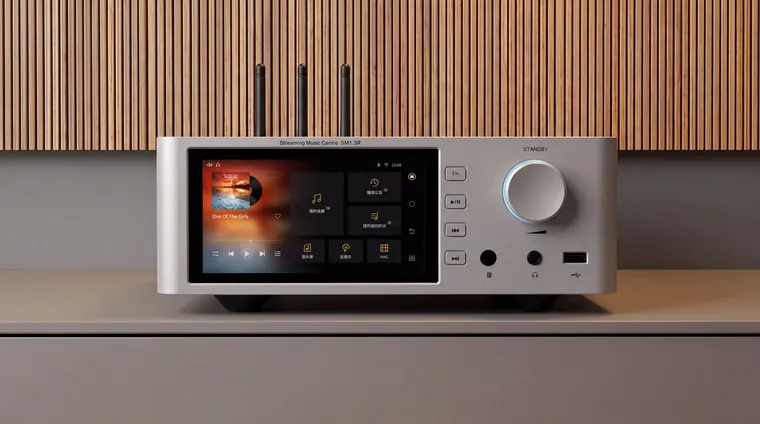
Shanling SM1.3R HD First Look: R2R Streamer at $1699
Shanling SM1.3R HD launched Oct 29 with an in-house R2R DAC, twin toroids, and $1699 / £1799 pricing. I have not heard it. Specs, the compare field, and whether it is worth chasing for review.
Spend more, get more. That is how a product line is supposed to work, and for most of this comparison it does. Then you find the one place it does not: the cheaper WiiM streams AirPlay 2 and the expensive one has never done it, on any production firmware. That single gap decides this purchase for a lot of people before any of the sound quality talk starts. If you landed here comparing the Pro to the Pro Plus instead, that is a different question, and it is answered below.
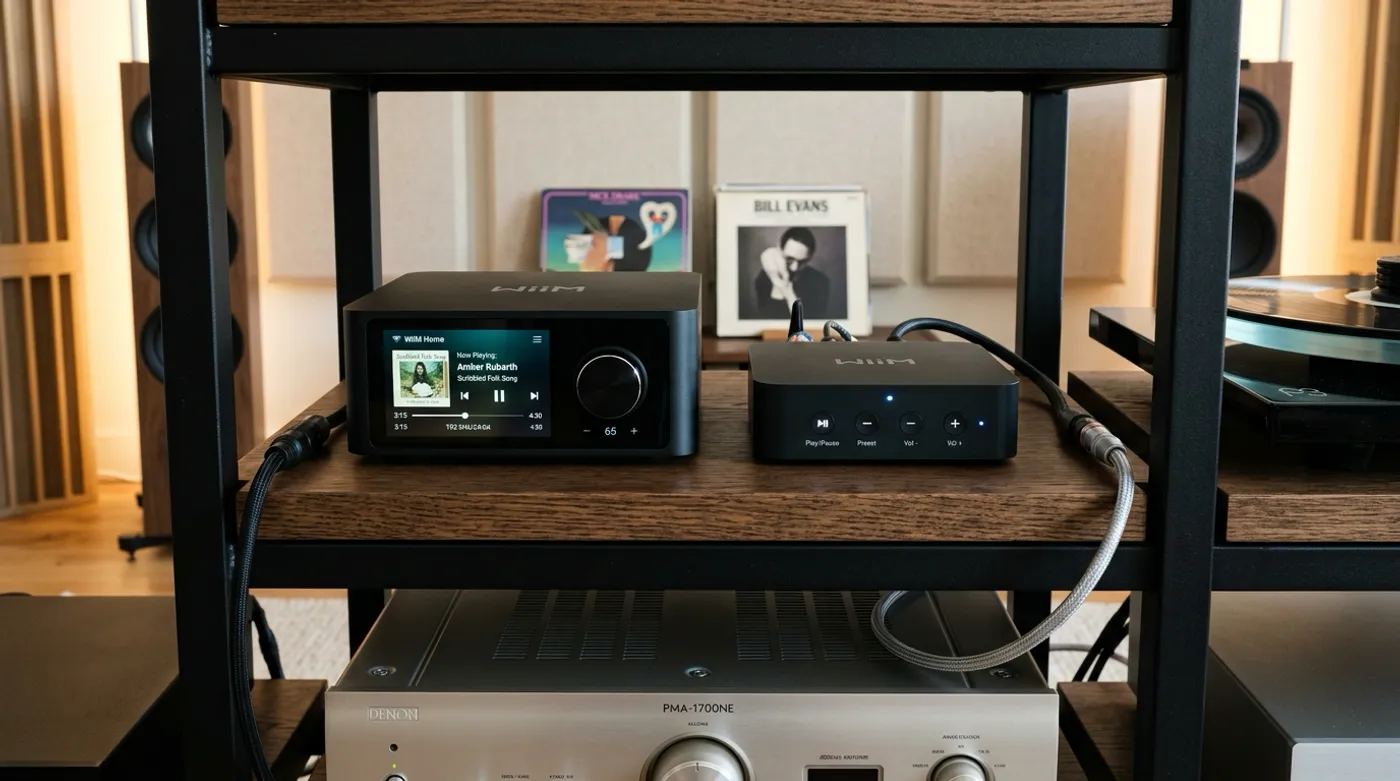
On WiiM’s US shop the Ultra lists at $349 and the Pro Plus at $249. Street prices move under those numbers; the day I checked, Crutchfield had the Pro Plus at $219. For the extra money you get a 3.5-inch touchscreen, a phono input, HDMI ARC, a headphone output, a subwoofer output, Wi-Fi 6, and a box that is trying to be the household hub. It is a lot of hardware, and it is why I bought one.
You also lose AirPlay 2.
WiiM’s own spec sheet lists Spotify Connect, TIDAL Connect, Google Cast, Roon Ready, DLNA, and Alexa for the Ultra. AirPlay 2 is not on that list, and it is on the Pro Plus list. This is not a firmware update anyone is waiting on. The Ultra has never had it.
If your household sends music to speakers by hitting the AirPlay icon on an iPhone, that is the whole decision. Everything below matters less than that one line.
Take AirPlay off the table for a moment, because for a lot of people it genuinely does not matter, and the rest of the comparison is lopsided in the Ultra’s favor.
The phono input is the sleeper feature. A moving-magnet phono stage is a $100 box on its own, minimum, and the Ultra has one built in. If you own a turntable without a built-in preamp, the Ultra just absorbed a component. My Rega Planar 3 does not need it, but plenty of decks do.
HDMI ARC turns it into a TV audio hub. The TV’s audio goes into the Ultra over one cable and out to your amplifier. That is a second box absorbed, and it is the feature that lets a two-channel system quietly become the household system without anyone complaining about the remote.
Room correction is the one that changes the sound. The Ultra runs correction with independent left and right channels. This is still cheap, genuine room correction in a streamer, and room correction is the single highest-value thing most systems are missing. I have written at length about why measuring your room beats buying more gear, and having it built into a box at this price is remarkable. It is not Dirac Live, let alone Dirac ART, and it does not pretend to be either. But it is real and it is included. WiiM now lists RoomFit on the Pro and Pro Plus too, so “the Ultra is the only one that corrects” is no longer a clean line. I have used the Ultra’s correction in this room. I have not measured the cheaper models.
The screen is better than it sounds on paper. I was ready to call the touchscreen a gimmick. It is not. Album art and a working VU meter mean the streamer stops being an invisible box you control entirely through a phone. Small thing, daily payoff.
The Ultra runs an ESS ES9038 Q2M. The Pro Plus runs an AKM AK4493SEQ. Both top out at 24-bit/192kHz for streaming. You will see 384kHz and DSD512 quoted for the Ultra in various places; WiiM’s own specification page says 192kHz/24-bit, and I would trust the manufacturer over the aggregators.
Both measure well past the point where the DAC is your system’s limitation. The Ultra’s line output is quoted at 121 dB SNR, the Pro Plus at 120 dB on some sheets and 121 dB on WiiM’s comparison table. That is not a difference you will hear in a room with a noise floor.
Here is the part worth saying plainly, because it cuts against spending more: if you are feeding an external DAC, the DAC chip inside either unit is irrelevant. You are using the digital output. The Pro Plus does optical and coax out, the Ultra does optical, coax, and USB. Buy on features and outputs, not on the chip.
It is smaller, it is cheaper, and it does AirPlay 2. That is a shorter list, but it is not a weak one.
The Pro Plus is the right answer if you already own a DAC you like, you want a streaming front end and nothing else, and you want it to disappear into the rack. It is Roon Ready, it does Chromecast, TIDAL Connect, and Spotify Connect, and it has a line input with a Burr-Brown PCM1861 ADC if you need to digitize something.
There is also an argument I find genuinely persuasive: buy the Pro Plus and spend the difference on your room instead. A UMIK-1 measurement microphone costs $79 and will teach you more about why your system sounds the way it does than any streamer upgrade at this price.
A lot of readers who open this page are weighing WiiM Pro vs WiiM Pro Plus, not Ultra vs Pro Plus. I do not own a Pro or a Pro Plus. I own the Ultra. The split below is from WiiM’s Pro Plus page, the Pro overview, and the comparison table on the Ultra page, not from a side-by-side listen in this room.
Same size. Same streaming stack. Both do AirPlay 2, Google Cast, Spotify Connect, TIDAL Connect, Roon Ready, optical in, line in, and optical plus coax out. The Plus is not a mini Ultra. It is the Pro with a better analog stage.
DAC. The Pro uses a TI PCM5121, quoted at 106 dB SNR and -92 dB THD+N on analog out. The Pro Plus uses an AKM AK4493SEQ, quoted at 121 dB SNR and -113 dB THD+N. If the WiiM is going straight into an amp or powered speakers on RCA, that is why the Plus exists. If you already own a DAC you like and you are sending optical or coax, both boxes are just moving bits, and WiiM’s own copy points you at the cheaper Pro.
ADC. Analog in on the Pro is a fixed 48 kHz/16-bit conversion. The Plus uses a TI Burr-Brown PCM1861 and can take line in up to 192 kHz/24-bit. That matters if you are digitizing a tape deck, a CD player, or another RCA source. It does not matter if line in is a spare port you will never use.
Price. WiiM’s US shop still lists the Pro at $169 and the Pro Plus at $249 (checked 2026-11-02). Street prices usually sit under those. Call it roughly $50 to $80 more for the Plus, depending on who is selling. That is a smaller gap than the jump to the Ultra at $349 list.
Remote. The Voice Remote is optional on the Pro; WiiM says it is not in the box. The Pro Plus includes it, and so does the Ultra. If you want a physical remote without buying an accessory, the Pro is the model that charges you for it.
Who should pick which. Buy the Pro if you are using optical or coax into a DAC or receiver and you want AirPlay 2 for the least money. Buy the Pro Plus if RCA line out (or the better line in) is how you will actually listen, or you want the remote in the box. Skip both and read the rest of this page if you need a phono stage, HDMI ARC, a screen, a headphone jack, or a sub out. That is Ultra territory, and it is the box I live with.
The Ultra is the better product and I do not regret buying one. It is not the better buy for everyone, and the reason has nothing to do with sound quality. WiiM built a more capable streamer and left out a protocol that half of Apple-owning households use every day. If you are one of them, the cheaper box is the right box, and that is a strange sentence to write about a product line that otherwise makes so much sense.
The longer ownership writeup these sibling notes sit on is my WiiM Ultra review. If you want to see how the Ultra holds up against competitors rather than its own siblings, I have compared it to the Eversolo DMP-A6 and to the Cambridge Audio CXN.
Shanling SM1.3R HD launched Oct 29 with an in-house R2R DAC, twin toroids, and $1699 / £1799 pricing. I have not heard it. Specs, the compare field, and whether it is worth chasing for review.
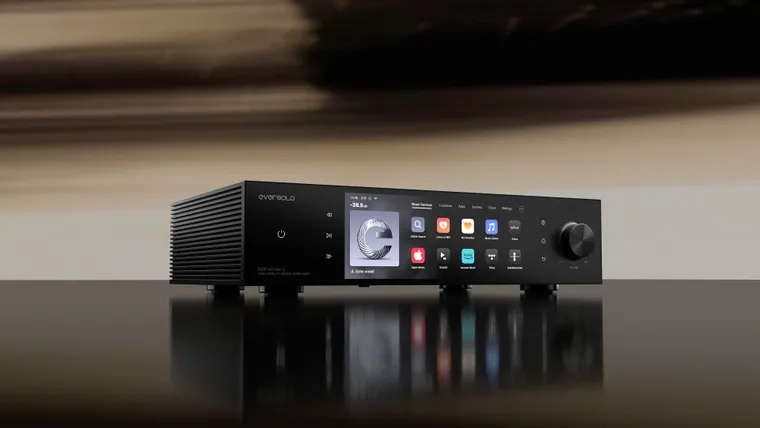
Eversolo DMP-A8 Gen 2 and Master Edition Gen 2: what changed vs the original A8, US and UK pricing, vs DMP-A6 and WiiM Ultra. I have not heard either Gen 2 box.
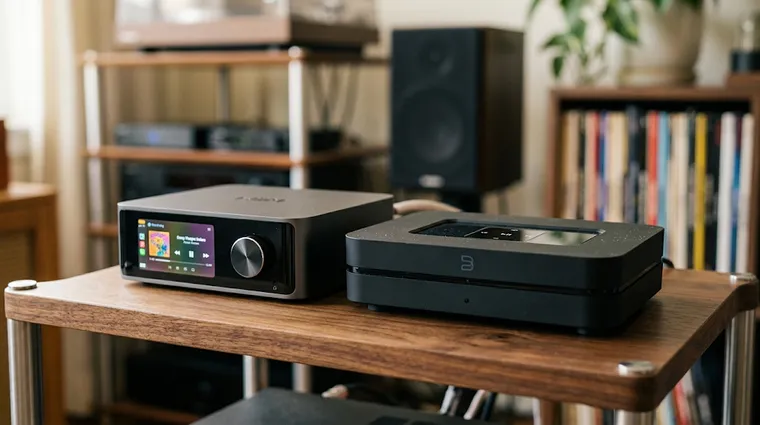
Bluesound added Apple Music to BluOS this week. I own a WiiM Ultra. I have not used a Node with Apple Music. Here is what the native path supports, what AirPlay still does, and who should care.