You traded great sound for convenience. You can have it back for less than you think.
Matt · · 2 min read
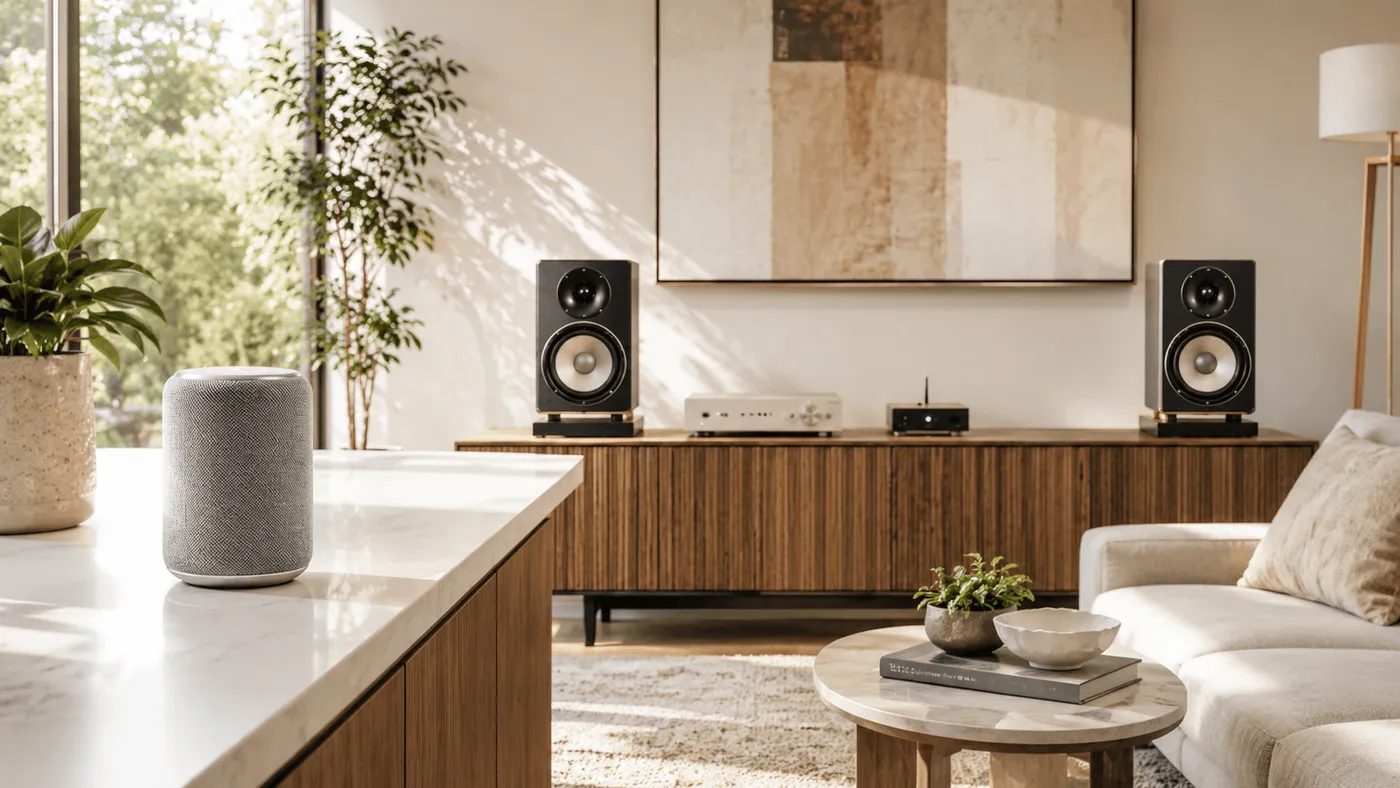
Somewhere around 2012, we collectively decided that audio quality didn’t matter anymore. We traded turntables and bookshelf speakers for a $49 Bluetooth hockey puck on the kitchen counter, and called it progress. Spotify made our music portable. Apple made our earbuds wireless. And Sonos, God bless Sonos, convinced us that a $450 plastic cylinder was a hi-fi system.
It isn’t.
Nobody told you this: streaming has gotten very good. Tidal and Apple Music now offer lossless audio, actual CD-quality, sometimes better. The infrastructure finally caught up. The only problem is that most of us are still feeding that gorgeous signal into speakers that make it sound like a car radio.
There’s a reason your parents’ living room sounded the way it did. The floor-standing towers, the separate amplifier, the receiver with actual weight to it, that wasn’t nostalgia or excess. It was physics. Stereo separation, a real amp driving real speakers, a signal path that respected the music, these things produce sound you feel in your chest, not just hear with your ears.
You don’t need all that anymore. But you do need something.
The good news is that “something” costs about what you’d spend on a weekend in Nashville.
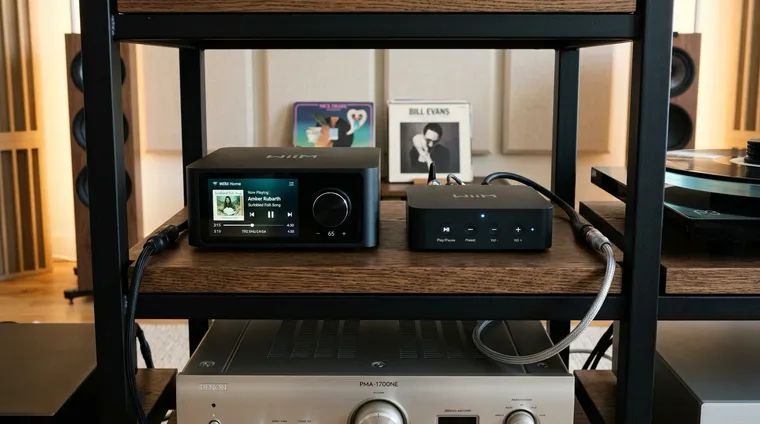
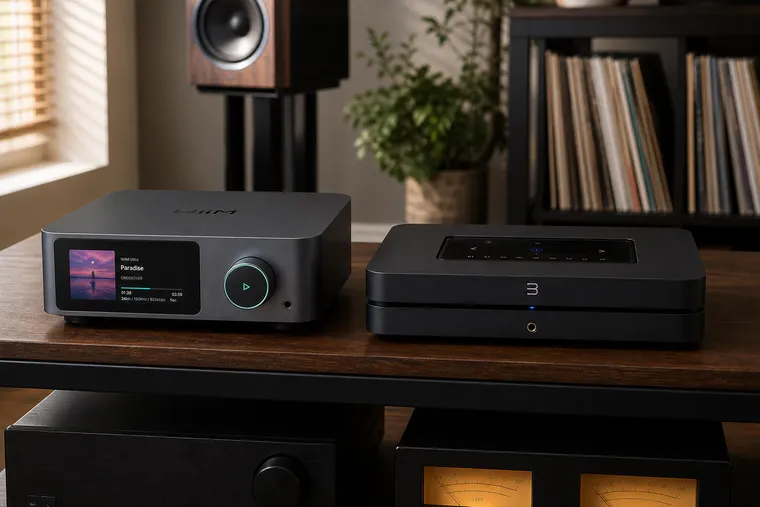
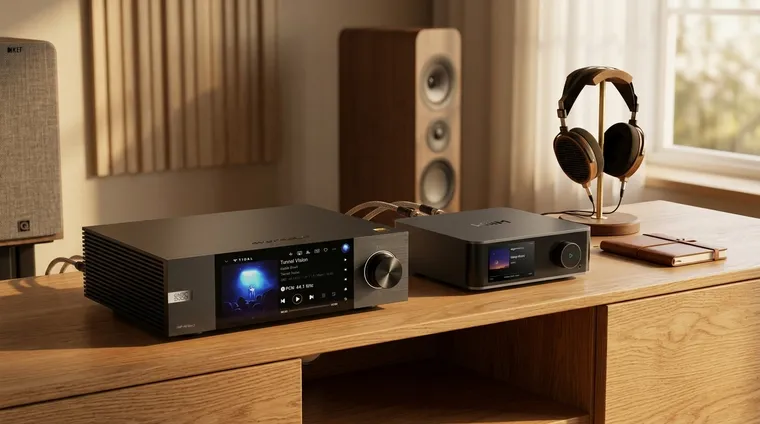
A pair of KEF Q150 bookshelf speakers ($500 street price, often on sale, the budget cousin of the LS50 Meta I’ve lived with for years) produces a soundstage so wide and accurate that audiophile reviewers still argue about whether they belong at twice the price. Add a Schiit Modi Multibit DAC ($150), a small box that converts your digital signal into an analog one with the kind of warmth that makes you want to sit down and actually listen, and pair all of it with a Rega Brio integrated amplifier ($1,000 new, less used) that drives those speakers with 50 watts of British-made authority.
Total damage: around $1,000 to $1,500, depending on where you shop. Yes, the Rega is the splurge. It’s worth it.
The result is embarrassingly better than Sonos. It’s the difference between eating a great steak and eating a picture of a great steak.
Setup takes an afternoon. You put the speakers on stands or a bookshelf, plug in a few cables, connect your laptop or phone, and press play. There’s no app. There’s no router pairing process. There’s no firmware update that breaks the whole thing three days before a dinner party. There’s just music, sounding the way it was supposed to sound.
Is this a rant against convenience? Not really. Use your Sonos in the bathroom. That’s what it’s for. But in the room where you actually live, the living room, the home office, wherever you spend your evenings, you deserve better than a speaker designed primarily to look good in an Architectural Digest kitchen spread.
Your ears remember what good audio sounds like. They’re just waiting for you to give it back to them.