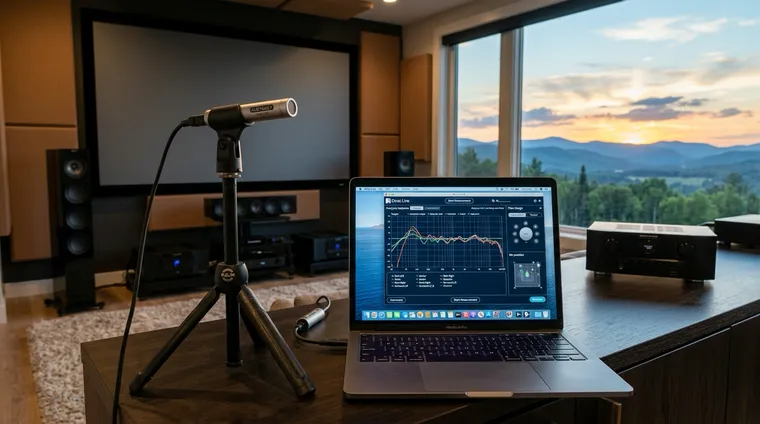
Audyssey vs Dirac Live: Is the Upgrade Worth $349?
Audyssey came free with your receiver. Dirac Live costs $259 to $349 on top. Here is what the money actually buys, which rooms need it, and when Audyssey XT32 is already enough.
I did not expect to write this sentence: Spotify now sounds pretty good.
The short answer: Spotify Lossless streams FLAC up to 24-bit/44.1kHz (CD quality) and is included with a standard Premium subscription. It is a real, audible upgrade over the old 320kbps stream, but only if you skip Bluetooth. Use a wired connection or Spotify Connect, turn on Exclusive Mode on Windows, and feed a real DAC. Through wireless headphones, you are not actually hearing lossless.
I spent years using other services for serious listening. Qobuz for classical and jazz, Tidal when I wanted something broader, Apple Music whenever someone sent me a playlist and I was too lazy to hunt it down elsewhere. Spotify was for background noise, for long drives, for mornings when I wanted algorithmic suggestion without effort. The audio quality, capped at 320kbps lossy compression, was simply not worth defending.
Then in September 2025, they turned on lossless. Up to 24-bit/44.1kHz FLAC, included in a standard Premium subscription, available on desktop, mobile, and a growing list of Spotify Connect devices. I reacted to this news the way you might react to finding out your favorite cheap restaurant quietly hired a talented chef: pleased, slightly suspicious, and curious enough to pay attention.
After six-plus months of listening, through good equipment, bad equipment, wired connections, Bluetooth connections, and Windows with Exclusive Mode finally enabled, I’ve learned a few things.
Yes, and this trips people up because Spotify spent years promising a “HiFi” tier that never shipped. There is no separate tier to buy. Lossless is baked into standard Premium as of the September 2025 rollout, and in 2026 it is fully live on Individual, Duo, and Family plans, on desktop, iOS, Android, and a growing list of Spotify Connect devices. It is not on the free ad-supported tier, and it is off by default, so most people who “have” it have never actually switched it on. You enable it per device in the audio quality settings, which is the part the next sections cover.
Spotify’s lossless format tops out at 24-bit/44.1kHz. That is CD quality, technically speaking. It is not high-resolution audio in the way that Qobuz’s 192kHz files or Tidal Max’s catalog are high-resolution. If this distinction bothers you, you know who you are.
For everyone else: FLAC at 44.1kHz, delivered without lossy compression artifacts, sounds better than 320kbps Ogg Vorbis through a decent DAC. Not life-changing, not night-and-day, but real. The kind of real where you turn it on, listen for twenty minutes, turn it off as a test, and immediately notice something missing. That’s when you know the upgrade is worth making.
The catalog experience is also better than I expected. This is not a separate lossless catalog you have to hunt through, and you do not need to rebuild your playlists. Spotify says lossless is available across nearly every song, though it is not available for music videos, podcasts, or audiobooks. For music, it mostly feels like Spotify flipped a switch and the service you were already using got better. That is the best possible version of this rollout.
I’ll be direct: if you’re listening through wireless headphones, Spotify Lossless is not reaching your ears. Full stop.
Bluetooth is the bottleneck. Even if Spotify sends your phone a FLAC stream, that signal still has to be re-encoded for the trip from phone to headphones. Depending on your device, that may mean SBC, AAC, aptX, LDAC, or one of the newer codecs. LDAC at 990kbps is one of the better common options, and aptX Lossless can do clever things with compatible hardware, but the practical advice stays simple: if you want actual lossless playback, use a wired connection or a compatible Wi-Fi/Spotify Connect device. Spotify itself warns that connection type, including Bluetooth, AUX, and Spotify Connect, can affect whether you actually experience lossless quality.
This is not a reason to feel cheated by Spotify. It’s just a physics problem. The solution is a wired connection: USB-C to a DAC, or USB-C to the headphone adapter your phone probably shipped with (and which you probably ignored).
The audio quality difference between Bluetooth and wired, through good headphones, is more immediately obvious than the difference between lossy and lossless streaming. If you haven’t tried wired recently, try it. I’ll wait.
Android and iPhone: Spotify → Settings → Audio Quality → Lossless. While you’re there, turn off volume normalization if you’re doing deliberate listening. It smooths out dynamics in ways you might not want.
Windows, this is the important one. In March 2026, Spotify shipped Exclusive Mode for Windows. This gives Spotify full control of the selected audio device and bypasses the system audio mixer, which otherwise may resample audio, mix in other system sounds, or alter volume before the signal reaches your DAC. With Exclusive Mode off, your 44.1kHz FLAC gets converted to 48kHz before it reaches your DAC. The conversion is mathematically competent but not bit-perfect. Exclusive Mode eliminates it entirely. Spotify also recommends turning off Crossfade, Automix, Normalize Volume, and the Equalizer for true bit-perfect playback.
Spotify → Settings → Playback → Output → select your DAC or audio interface → turn on Exclusive Mode. It will not show for Bluetooth headphones, built-in speakers, or virtual audio devices, which is Spotify’s way of telling you this feature is for people with real hardware. If that is the part you are missing, a real pair of speakers beats a smart speaker by more than lossless ever will.
This is the single biggest free improvement available to Windows users. The fact that it took Spotify until early 2026 to ship it is a separate, more aggravating conversation.
Mac: Exclusive Mode isn’t available yet. Spotify has said it’s coming. For now, set your output to 44.1kHz manually in Audio MIDI Setup and accept that you’re doing what you can.
I’m going to assume you’ve fixed the connection (wired) and the settings (Exclusive Mode). Now you’re asking whether hardware makes a difference. It does, if your current hardware is a laptop headphone jack or the analog output on a phone.
The actual entry point: The FiiO KA11 (around $30) is the product that makes the old “you need to spend real money to hear better sound” argument look silly. It is tiny, USB-C friendly, and powerful enough for a surprising number of easy-to-drive wired headphones. It is not glamorous. It is a small, useful thing that solves the problem. If you just want to make Spotify Lossless work properly from a phone or laptop, start here.
The nicer portable option: The iFi GO bar is excellent for portable listening when you’re using better wired headphones. It sits higher up the price range than some people expect, but it belongs on the list. The step up from the FiiO is audible. If you’re willing to go further still, the Chord Mojo 2 is the portable DAC/amp I keep coming back to.
Desktop: The Schiit stack is still easy to recommend, a Modi 5 ($149) into a Magni headphone amp ($119 and up). Simple boxes, good measurements, no nonsense once everything is plugged in. (Their customer support is also exceptional, which matters when you’re buying electronics online from a company with a deliberately funny name.)
Wired headphones are different from wireless, and not just in convenience. They tend to be more resolving at equivalent price points, partly because none of the engineering budget went to Bluetooth chips, pairing software, or noise cancellation processors.
The Sennheiser HD 560S ($199) is my recommendation for most people. It’s open-back, which means it sounds more spacious and natural than closed alternatives of similar price. It’s honest, slightly cool, and reveals detail without punishing you for it. The Beyerdynamic DT 700 Pro X ($299) is closed-back with a warmer, more substantial low end, better for environments where you don’t want to hear the room, or for music with weight in the bass that you want to feel. The Hifiman HE-400se ($109) is a planar magnetic headphone at a price that should not produce a planar magnetic headphone. It does.
For pure audio quality ceiling, Spotify does not win. Here is how the major lossless services stack up in 2026:
| Service | Max quality | Price (individual) | Best for |
|---|---|---|---|
| Spotify Premium | FLAC 24-bit/44.1kHz (CD) | $12.99/mo | Catalog, discovery, playlists, everyday listening |
| Apple Music | ALAC up to 24-bit/192kHz | $10.99/mo | Value, hi-res ceiling, Apple ecosystem |
| Tidal | HiRes FLAC up to 24-bit/192kHz | $10.99/mo | Broad hi-res catalog, mainstream depth |
| Qobuz | FLAC up to 24-bit/192kHz | $12.99/mo | Mastering quality, liner notes, the purist pick |
Read that table and Spotify loses on paper: it is the only one capped at 44.1kHz, and it is not the cheapest. Qobuz is still the service most deliberately built for people who care about mastering, and both Tidal and Apple Music go higher on resolution for less money.
For catalog breadth, discovery, playlists, and the infrastructure of a music listening life, though, Spotify wins by a margin that is not close. That is the real trade: you give up the hi-res ceiling and keep the best music-discovery engine there is.
If you use Spotify because of Spotify, the playlists, the Discover Weekly, the shared libraries, the everything of it, then enabling lossless and getting a DAC is the right move. You’re not giving anything up. You’re just hearing what you already love a bit more of the way it was intended.
It matters to you if: you already pay for Premium, you own or plan to own wired headphones and a DAC, and you’ve ever had the nagging thought that your streaming audio could sound better. It does not require rebuilding your collection, switching services, or buying a $3,000 turntable. It requires turning on a setting and spending $100 to $200 on a small box. And if a streamer with lossless support built in sounds more appealing than a dongle, the WiiM Ultra is where I’d point you.
That’s a good deal. I didn’t expect to mean that about Spotify.
Audyssey came free with your receiver. Dirac Live costs $259 to $349 on top. Here is what the money actually buys, which rooms need it, and when Audyssey XT32 is already enough.
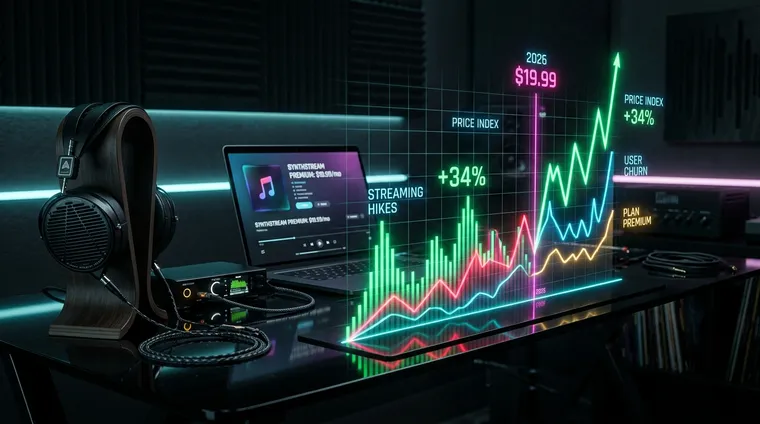
Spotify, Apple Music, Amazon, and YouTube Music all raised US prices in 2026, and Tidal is next. Here is what each service costs now, what you get for the money, and who the hikes make the worst buy.
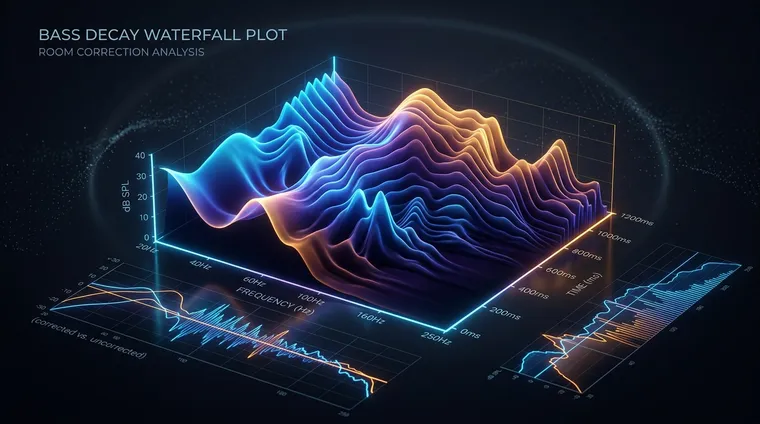
Dirac ART uses your speakers and subs to shorten bass decay at your mic positions. Here is what Active Room Treatment actually does, which receivers support it, what the $299 add-on costs, and what has been tested.