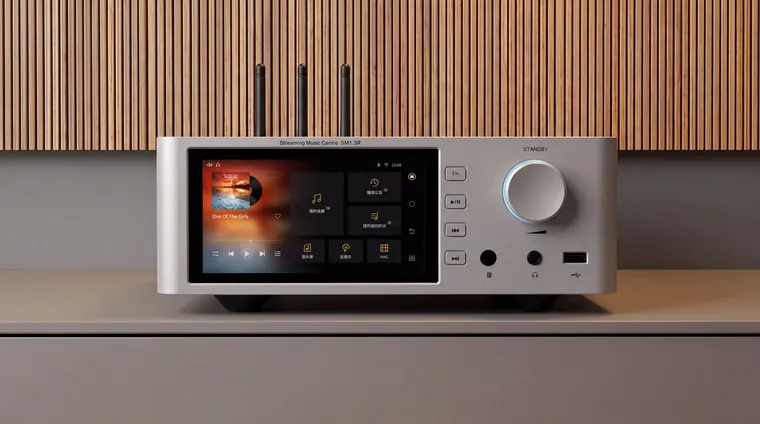
Shanling SM1.3R HD First Look: R2R Streamer at $1699
Shanling SM1.3R HD launched Oct 29 with an in-house R2R DAC, twin toroids, and $1699 / £1799 pricing. I have not heard it. Specs, the compare field, and whether it is worth chasing for review.
The Ultra is the streamer in my rack. The T8 is a transport with no DAC, at about four times the list price. I can tell you what the Ultra does here. The T8 section is the spec sheet and the reviews, labeled that way.
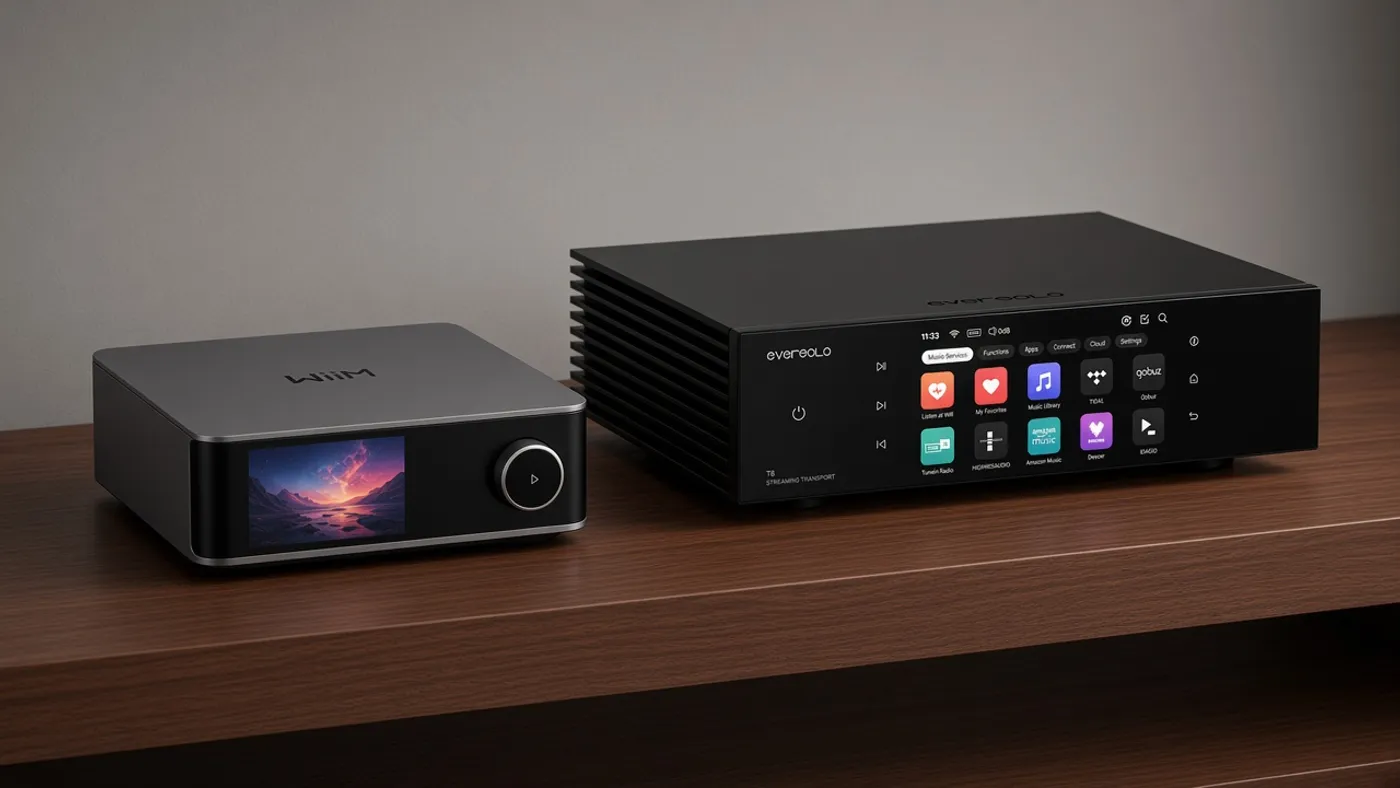
The WiiM Ultra is the streamer in my rack. The Eversolo T8 is a streaming transport with no DAC inside, listed at $1,380. I have not heard the T8. One box still contains a preamp. The other sends bits to a converter you already bought, then gets out of the way.
The Ultra is a hub. WiiM’s US page listed it at $349 on 19 October 2026. Older pieces on this site say about $329, the launch price from 2024. At either number it is the box I reach for when one chassis has to stream, run RoomFit, take HDMI ARC, take a phono cartridge, drive headphones, and feed a sub. The screen is 3.5 inches. The DAC is an ESS ES9038Q2M. In this system I leave that DAC out of the path.
The T8 is a transport. Music Direct had it at $1,380 on the same day, in stock. StereoNET’s review (22 January 2026) used that USD figure. Trusted Reviews (16 June 2026) says $1,380 in the review text. Their spec table prints $1,399, so the price in this piece is the dealer listing and the review prose. There is no analog output. Trusted Reviews calls it the front half of a streamer: digital outs only. If the next component wants an RCA line, the T8 cannot be the last box.
I have lived with the Ultra. The listening below is already on the WiiM Ultra review and on the $70 box. The T8 paragraphs are manuals and reviews.
The chain in the $70 box piece is still the one: WiiM Ultra into an SMSL PO100 PRO, into a Chord Qutest, into a Naim Uniti Atom, into KEF LS50 Metas with a KC62 under them.
Before that little DDC, USB ran from the Ultra straight into the Qutest. I wrote that it already sounded detailed, controlled, and resolved, and that I had no specific complaint. With the PO100 PRO in line, the soundstage opened and crowded passages got easier to separate. That is the whole listening claim. Nothing new was auditioned for this page.
The Ultra review is the earlier chapter of the same rack: USB into the Qutest, then room correction and bass management on the LS50s and the KC62. The Qutest review is the converter. Once the Ultra is only supplying digits, the ESS chip inside it drops out of the argument. I have made that point before, on the days I was comparing WiiM models and again when the question was another brand’s voicing. Feed an external DAC and you are comparing outputs, apps, and price.
Research, not a side-by-side in this room. Ultra column from WiiM’s overview, checked 19 October 2026. T8 column from the spec block Music Direct reprints, cross-checked against StereoNET.
| WiiM Ultra | Eversolo T8 | |
|---|---|---|
| Role | Streamer, DAC, preamp | Streaming transport, no DAC |
| US price that day | $349 list | $1,380 at Music Direct |
| USB out | Up to 192 kHz / 24-bit | Up to 768 kHz / 32-bit, native DSD512 |
| I2S over HDMI | No | Yes, 8 pin modes, same PCM and DSD ceiling as USB |
| AES/EBU | No | Yes, 192 kHz / 24-bit, DoP64 |
| Coax and optical | Both, up to 192 kHz / 24-bit | Both, 192 kHz / 24-bit, DoP64 |
| Analog, phono, HDMI ARC, sub, headphone | Yes | No |
| Network | Wi-Fi 6, 10/100 Ethernet | Wi-Fi 6, gigabit Ethernet, SFP slot |
| Storage | USB drives | Two internal SSD bays, up to 8 TB each, plus two USB 3.0 ports |
| Screen | 3.5-inch | 6-inch |
| Streaming I could confirm | Spotify Connect, TIDAL Connect, Qobuz in the app, Google Cast, Roon Ready. No AirPlay 2 | Roon Ready, TIDAL Connect, Qobuz Connect. Spotify Connect is in other sources below. AirPlay is listed. Google Cast is not |
Music Direct’s streaming line reads “Roon Ready, TIDAL Connect, Qobuz Connect, DLNA etc.” It does not name Spotify. Spotify Connect is in the Trusted Reviews spec table and in Eversolo’s T8 firmware notes, which add a switch for Spotify Connect’s volume normalize. SFP modules are not in the carton. Music Direct says you buy the module, and that single-mode fiber and SFP copper modules are the supported kinds.
A transport exists to hand a file to a converter. If you already trust the converter, a second DAC in the streamer is a feature you will switch off.
That is the Ultra in this apartment. The analog stage is part of why I bought it, and the Ultra review covers room correction on the living room, the LS50s, and the KC62. The Qutest is what converts. After that, arguing about ESS versus nothing is a brochure argument.
The T8 deletes the DAC on purpose. Trusted Reviews puts the practical case: plenty of amps and active speakers already decode, and a DAC you kept does not need another one parked on top of it. The money question is whether the transport, at $1,380, changes what that DAC produces, or whether a streamer at WiiM’s $349 list plus a small reclocker already did the job you can hear.
I spent about $70 on the PO100 PRO and wrote down what changed. I have no T8 afternoon to put next to it.
Chord’s current Qutest page lists a galvanically isolated USB-B input to 768 kHz and native DSD512, two BNC coax inputs to 384 kHz each, and optical to 96 kHz. No HDMI. The T8’s I2S output, all eight pin modes, has nowhere to plug in. USB is the one T8 output that can use the high-rate ceiling, and it lines up with what the Qutest already accepts on USB. Coax from the T8 tops out at 192 kHz, which sits inside a single BNC input. The Qutest jacks are BNC, so a lead has to match. Optical connects, and Chord’s current optical limit is 96 kHz, below the 192 kHz the T8 can send on that jack.
Storage. Two bays under the chassis, 8 TB per drive, 16 TB if you fill both. StereoNET timed the install in a minute or two: a thumbscrew and a thermal pad in the box. Two USB 3.0 ports stay free for drives you already own. A library on a NAS does not need this. A library you want inside the transport does. The Ultra mounts USB storage. It has no internal drive bay.
AES/EBU. Balanced digital on XLR, 192 kHz / 24-bit and DoP64, the same ceiling as the coax and optical outputs. That matters when the DAC, or the digital input on an amp, is AES, or when the cable run is the reason you wanted XLR. The Ultra has no AES jack. The Qutest does not either, so this output is for a different converter than mine.
Isolated digital outs. StereoNET reports the USB, coax, and AES outputs are isolated. Music Direct’s Eversolo copy also calls the I2S output isolated, with eight modes because I2S pinouts were never standardized. StereoNET says the same thing about the eight modes, and found I2S the strongest connection on a DAC that actually has the input. I have not stepped through a mode. On a Qutest the menu is decorative.
SFP, beside gigabit Ethernet. Fiber isolation is the sales pitch. The module is extra, and StereoNET’s off-list module quit during the review; they point at Eversolo’s short compatible list. The same review heard the SFP path as slightly more focused than the RJ45 port. Trusted Reviews is cooler about it and treats the slot as future-proofing. Wi-Fi 6 is there if you never buy a module. The Ultra’s wired port, on WiiM’s sheet, is 10/100, not gigabit, and there is no fiber slot.
Screen, EQ, and the app. Six inches, and StereoNET was taken with library browsing off the internal drives: art, sorted albums, no separate server required. Roon Ready is on the sheet. Evotune is Eversolo’s room tool. StereoNET ran it with a UMIK-1, disliked the automatic curve, and preferred a light graphic or parametric EQ. Music Direct lists a 10-band PEQ plus FIR import. The Ultra has RoomFit. I have used that one in this room. I have not used evotune.
Eversolo also claims a linear supply and a femtosecond clock. Music Direct and StereoNET both repeat the claim, including a noise figure of 30 μV. That number is theirs. I have not measured the supply.
I2S does nothing for this DAC. AES does nothing for this DAC. The paths that remain are USB, coax, and optical. The Ultra already has those three. The PO100 PRO already takes the Ultra’s USB and hands the Qutest BNC or optical, which is the chain I published. The T8’s 768 kHz USB ceiling matches the Qutest’s USB ceiling on Chord’s page. It does not create an input the Qutest lacked.
A system that still wants a preamp, a turntable input, or the television on HDMI ARC is shopping in the Ultra’s category. The T8 has no analog outputs, no digital inputs, and no HDMI. Trusted Reviews lists the missing digital inputs and the missing Google Cast. It also has no phono stage and no sub out. Those are Ultra jobs. The sub out now works while USB out is selected; that fix landed in WiiM firmware 5.2.704152 on 10 January 2025, and it is already corrected on the Ultra review.
If you want Eversolo’s screen and app and you also want a DAC and a preamp in the same chassis, the nearer page is Eversolo DMP-A6 vs WiiM Ultra. One shelf up, the DMP-A8 Gen 2 first look is the premium streamer, DAC, and preamp that also grows digital outs (including I2S) so it can run as a transport. I have not heard the A8 Gen 2. The T8 is the Eversolo that refuses the DAC and preamp roles entirely.
Shanling SM1.3R HD launched Oct 29 with an in-house R2R DAC, twin toroids, and $1699 / £1799 pricing. I have not heard it. Specs, the compare field, and whether it is worth chasing for review.
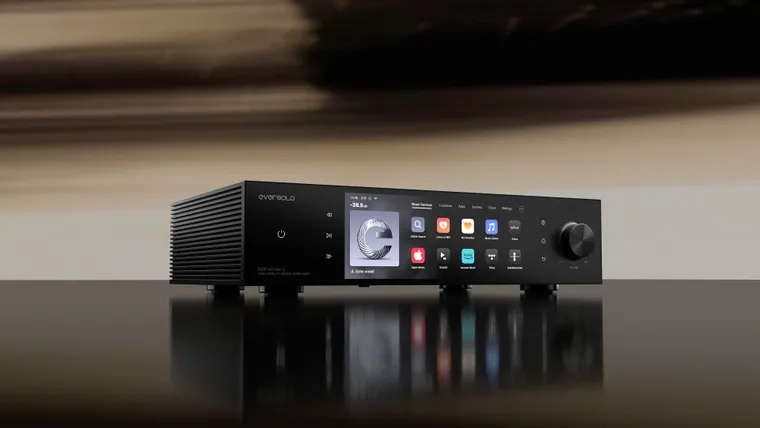
Eversolo DMP-A8 Gen 2 and Master Edition Gen 2: what changed vs the original A8, US and UK pricing, vs DMP-A6 and WiiM Ultra. I have not heard either Gen 2 box.
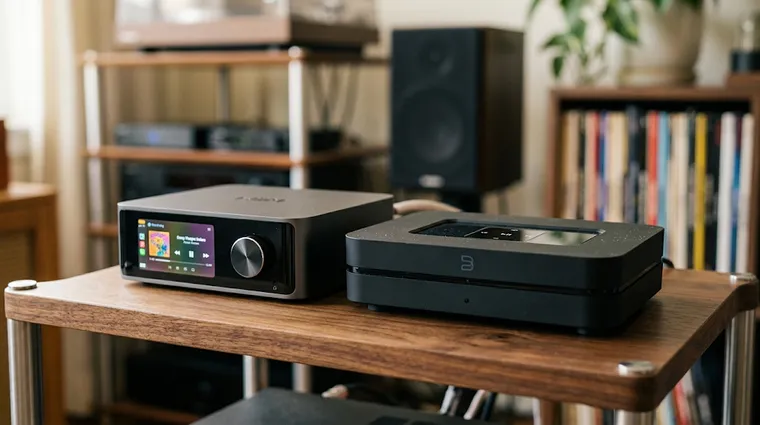
Bluesound added Apple Music to BluOS this week. I own a WiiM Ultra. I have not used a Node with Apple Music. Here is what the native path supports, what AirPlay still does, and who should care.