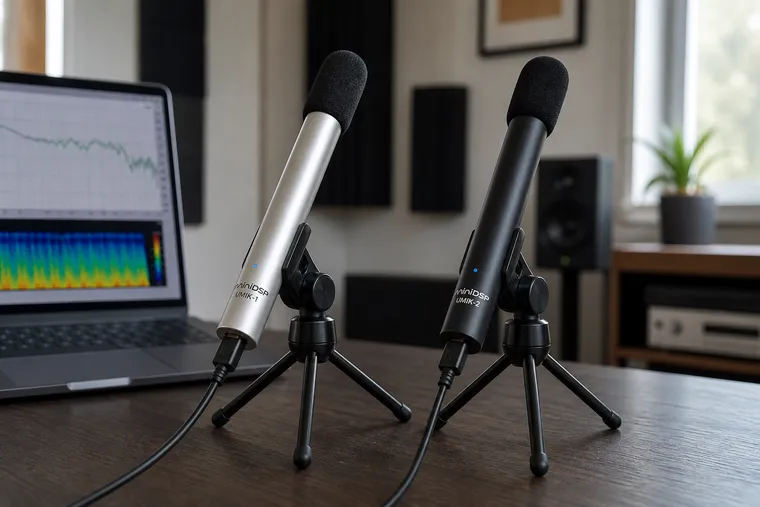
UMIK-1 vs UMIK-2: Do You Need the $195 Measurement Mic?
The UMIK-2 costs 2.5 times more than the UMIK-1 and handles 8 dB less SPL. I measure with a UMIK-1. Here is what the extra $116 actually buys, and when it is genuinely worth it.
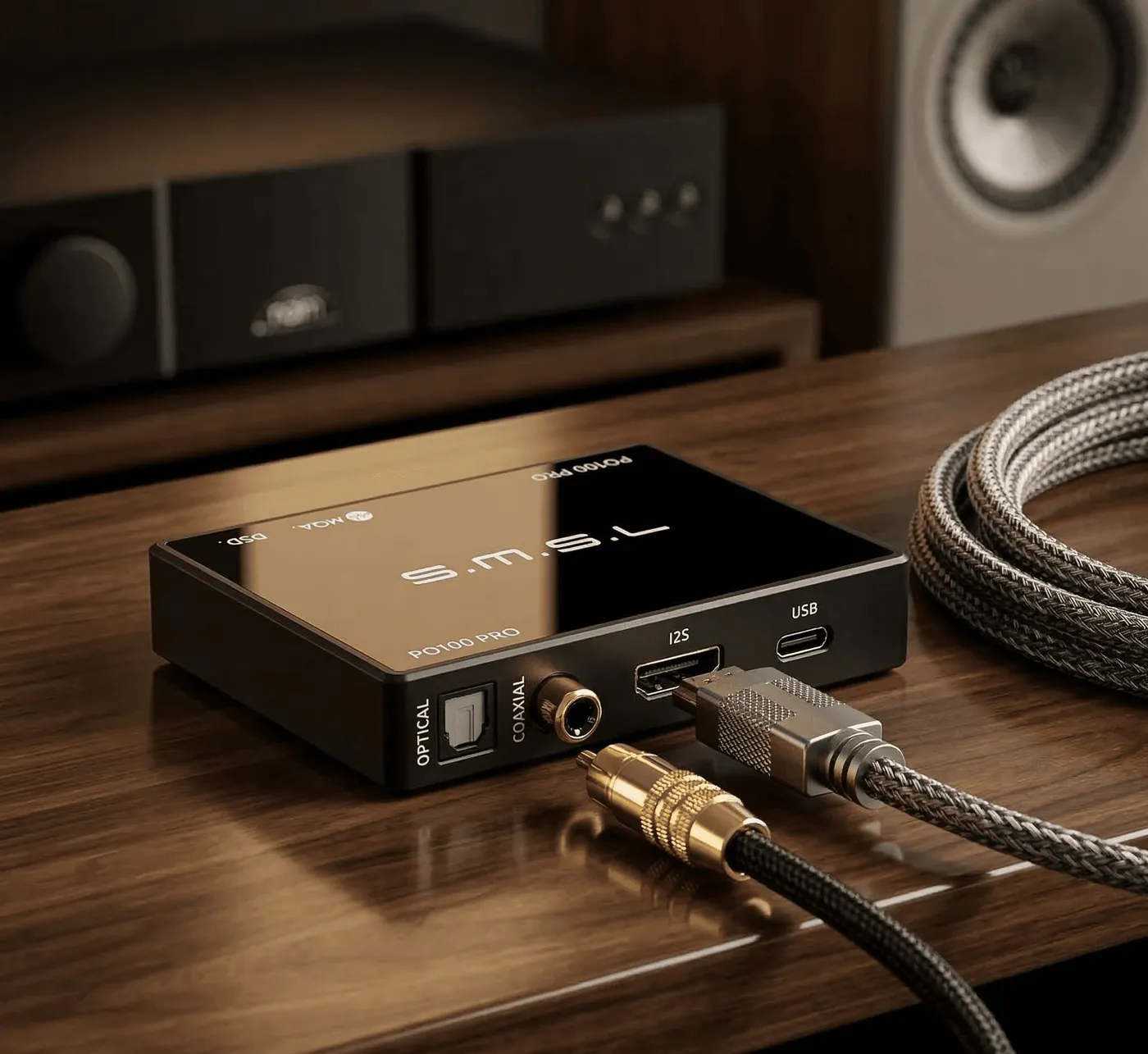
Can a $70 box improve a high-end audio system? Discover how the SMSL PO100 PRO DDC cleans USB noise to unlock better soundstage and clarity. Read the review!
I told myself I was done buying things.
I had the Chord Qutest. I had the Naim Uniti Atom. The KEF LS60 Metas were in the room. The KC62 sub was locked in underneath. The WiiM Ultra was handling source duties. It was a serious system to me, and I kept insisting it was finished, right up until I watched Cheapaudioman’s video about a $70 device called the SMSL PO100 PRO and spent the next fifteen minutes on Amazon.
It’s sitting behind my rack right now. You’d never know it was there. The system sounds better. That’s the whole story, but let me give you the useful parts.
The PO100 PRO is a DDC: a Digital-to-Digital Converter. The job is unglamorous. It takes your USB audio signal, cleans it up, and sends it to your DAC in a superior format.
Why does USB need cleaning? Because USB carries noise. The electrical interference from your computer or streamer rides in on the same cable as your music, introduces timing errors into the signal (jitter), and softens what your DAC can actually resolve. You may not be able to name what’s wrong, but you’ll hear it: a slightly compressed soundstage, instruments that blur at the edges, a background that never quite goes black.
The PO100 PRO strips all of that out. It accepts USB-C from your source, re-clocks the signal with its own precision clock, 75 picoseconds of output jitter, a measurement that competes with DDCs at three or four times the price, and sends a clean stream out via:
The chip inside is the XMOS XU316, a third-generation USB audio processor. It handles 32-bit/768kHz PCM, DSD512, and MQA decoding. The resolution ceiling here is a non-issue. Nothing you stream will test it.
My chain: WiiM Ultra → SMSL PO100 PRO → Chord Qutest → Naim Uniti Atom → KEF LS60 Meta + KC62 Sub.
Before the PO100 PRO, USB ran directly from the WiiM into the Qutest. It sounded exactly the way a Chord DAC with a good source should sound: detailed, controlled, resolved. I had no specific complaint.
After dropping the PO100 PRO in and routing through I2S, the soundstage opened up. Instruments spread wider and sat further apart from each other. Dense passages, the ones where everything competes for space, became easier to read. The image gained depth. I felt more of the room around individual sounds.
It’s the kind of change that’s easy to write off as expectation bias right up until you pull the device out and register what’s missing. I pulled it out. I put it back. It stays.
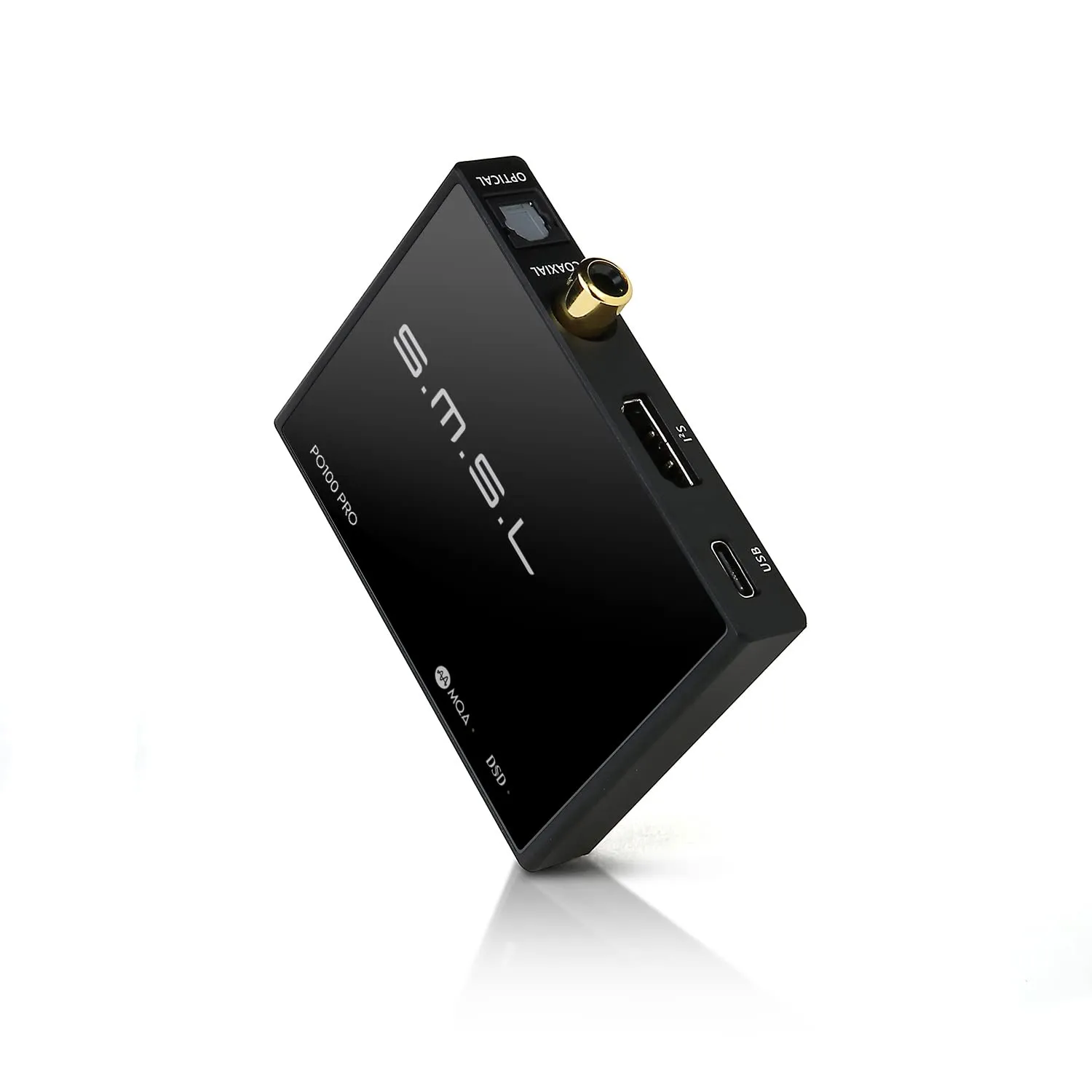
It’s invisible. The PO100 PRO is roughly the size of a business card. It lives behind my gear and contributes nothing to the visual clutter. Zero rack space, zero aesthetic compromise.
Setup takes five minutes. USB-C in, I2S out, select the input on the Qutest, done. There are no drivers to install, no software to configure, nothing to troubleshoot. It works.
UAC1 and UAC2 modes. A physical switch on the unit toggles between driverless UAC1 mode, which works out of the box with PS5, Nintendo Switch, and most operating systems, and full-resolution UAC2 mode. It’s a small feature. I appreciate that it’s there.
It costs $70. In a hobby where people spend more than that on power cables, a device with a real mechanism and a measurable result at this price is something you should take seriously.
If your DAC has an I2S input over HDMI, and the Chord Qutest, the Topping D90 series, the Audio GD R1, and plenty of others do, the PO100 PRO is the simplest upgrade available to your digital front end. The I2S pathway is where the real improvement lives.
No I2S? The coaxial output still delivers a re-clocked signal that beats raw USB. The benefit is smaller, but it’s real.
If you’re a tinkerer looking to extract more from an existing system without swapping major components, this is the lowest-friction experiment on the market. Cheap, reversible, and effective.
The SMSL PO100 PRO is not exciting to look at. It has no display, no knob, no physical presence worth noting. It sits behind your rack and does nothing visible. What it does audibly, in a system that can hear the difference, is earn its place.
Cheapaudioman put me onto this one. His channel has built a well-deserved reputation for finding real performance at prices that don’t require a second mortgage, and the PO100 PRO fits that pattern exactly. Watch the video, then buy the thing.
Seventy dollars. It’s not a difficult decision.
The UMIK-2 costs 2.5 times more than the UMIK-1 and handles 8 dB less SPL. I measure with a UMIK-1. Here is what the extra $116 actually buys, and when it is genuinely worth it.
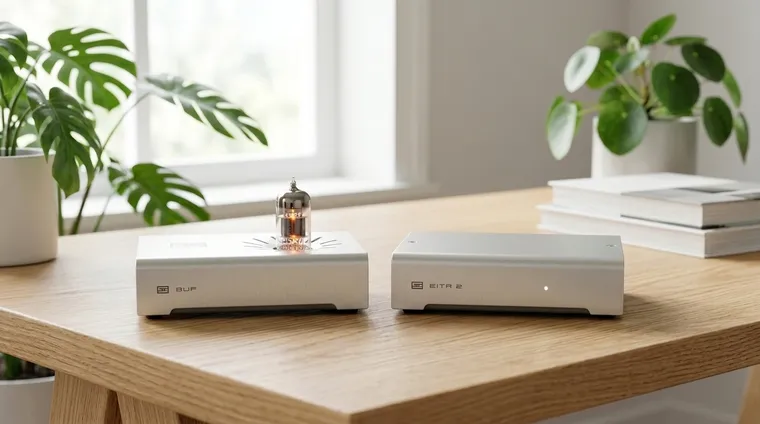
Schiit just launched two small, cheap signal-chain accessories: the Buf tube buffer and the Eitr 2 USB reclocker. Here is what they actually do, the honest debate around each, and whether they are worth the money.