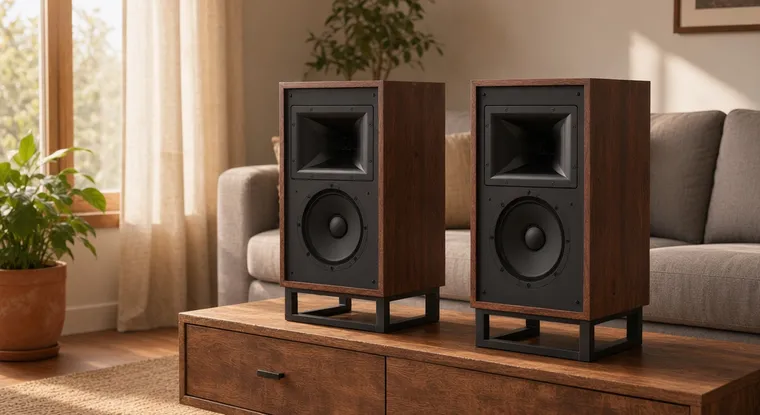
Klipsch Rebellion vs KEF LS50 Meta: What I'd Want to Hear
Klipsch's new Heritage bookshelf is 95 dB sensitive and $2,599 a pair. I own LS50 Metas, not Rebellions. Here are the specs, the amp question, and what I would actually listen for.
This is the start of a build journey: can a reasonably handy person build their own pair of Klipsch Cornwall-style speakers, and should they? Before I cut a single piece of plywood, I spent the research phase reading every build thread, plan set, and parts list I could find. Here is the honest map of the territory, what it costs, where it goes wrong, and where to start.
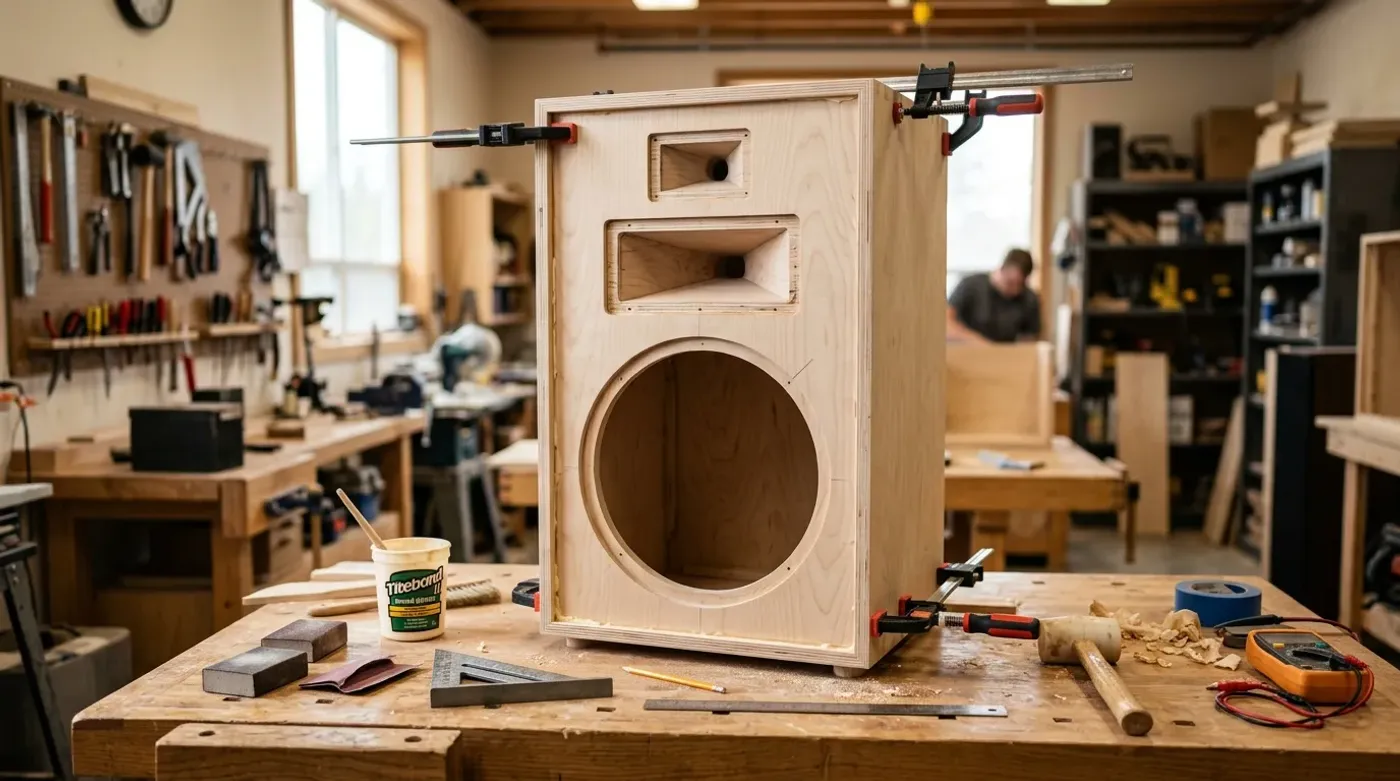
The Klipsch Cornwall is a big, old-school, horn-loaded loudspeaker that has been in and out of production since 1959. It is a three-way: a 15 inch woofer in a large ported box, a midrange horn, and a tweeter horn. The current model is the Cornwall IV; the Cornwall III is the recently discontinued version, and the one most DIY builders reference because its drivers and crossover are well documented in the community.
The number that matters most, and the one that reframed this entire project for me, is sensitivity. The Cornwall III is rated at 102 dB at 2.83V/1m, with a frequency response of 34 Hz to 20 kHz and 100 watts continuous power handling (Klipsch Cornwall III spec sheet). For context, the KEF LS50 Metas I wrote about needing a muscular amplifier sit at 85 dB. The Cornwall is roughly 100 times more efficient in terms of the power it needs to hit the same volume. A handful of watts will play these loud. That single fact changes what amplifier you put in front of them, and it is a big part of the appeal.
If you are going to clone something, you need to know what you are cloning. The Cornwall III’s recipe (Klipsch spec sheet):
The magic is the horn midrange and tweeter paired with that massive 15-inch woofer. Horns buy you the efficiency and dynamic speed; the big cabinet and woofer buy you the bass extension and scale.
The most traveled path is to build the cabinet yourself and buy proven drivers and a proven crossover. The late Bob Crites built a whole community around exactly this, and his parts remain the reference for Klipsch DIY (Klipsch community, Parts Express project).
Typical parts costs reported by builders: a Crites CW1526 woofer around 250 dollars, tweeter options around 225, and a Type B-2 crossover network around 227 (Audiokarma). A common upgrade is an Eminence woofer such as the Kappalite 3015 (around 300 dollars) that tunes well to the Cornwall cabinet and vent. One well-documented Parts Express build paired KP-250 PA horns, Bob Crites titanium tweeter diaphragms, an Eminence woofer, and a Cornwall B2 crossover network, and the builder rated it Intermediate, 8 to 20 hours, and 500 to 1,000 dollars for the project (Parts Express).
Here is where the research got interesting. The Cornscala, a Bob Crites design that blends Cornwall and La Scala thinking, is “a bit of a legend in the Klipsch community, with many thinking it sounds better than either the La Scala or Cornwall” (Audiokarma comparison thread). It exists as both a three-way and a later two-way version that Crites built around a Faital horn and driver.
The Cornscala uses a larger midrange horn than a stock Cornwall, crossing over lower (typically 400 or 500 Hz instead of 800), which pulls more of the critical vocal range into the horn and away from the woofer. The trade-off is cabinet size: the Cornscala cabinet is deeper and heavier.
So the Cornscala is the “build something arguably better than a stock Cornwall” path, at a real step up in cost.
If the goal is “big, efficient, horn-driven sound” rather than “an exact Cornwall replica,” the most-recommended affordable route inside the Klipsch community itself is DIY Sound Group (DIYSG). As one heritage member put it, it is run essentially as a service to the DIY community, with proven high-efficiency two-way horn designs that “will stay right with the Klipsch in terms of sound quality and efficiency” (Klipsch community). For true beginners wanting horns specifically, kits like the Frugal-Horn XL and Lowther Acousta 90 come up repeatedly as designed-for-novices starting points (Frugal-Horn, Lowther).
Every route shares one job: building the box. The factory uses MDF, but DIY builders consistently prefer Baltic birch plywood, typically 18mm or 3/4 inch, with extra internal bracing (StereoNET clone thread, Parts Express). Cornwall cabinet dimensions are easy to find, but a real caveat surfaced repeatedly: detailed, verified plans for the III specifically are harder to come by than for earlier generations, and the driver mounting changed between generations (early ones mounted from inside, later ones surface or flush mounted). Many builders end up reverse-engineering from photos and known external dimensions (Steve Hoffman forums, StereoNET).
If you are cutting the baffles yourself, a router with a circle guide is mandatory for the 15-inch woofer cutout, and you will need to make or buy templates for the rectangular horn cutouts.
New Cornwall IVs carry a 7,299 dollar pair MSRP; used IVs run roughly 3,780 to 5,590, and used Cornwall IIIs land around 2,650 to 3,100 a pair (HifiShark, Klipsch community).
Against that, a faithful DIY clone runs somewhere around 700 to 1,200 dollars in parts and wood, and a Cornscala 2,000 to 3,000. So DIY can undercut a used Cornwall III, but not dramatically once you count tools, finishing materials, and the cost of mistakes. And there is a real dissenting voice worth keeping: a long-time Klipsch member’s blunt take is that “with rare exception there is no DIY speaker kit that will compare to the Klipsch when all aspects are considered,” including warranty and resale value (Klipsch community). That sits directly against the Cornscala crowd who believe the DIY version sounds better. Both things are true for different buyers, and that tension is the honest center of this decision.
The conclusion I am drawing: you do not build Cornwalls to save money. You build them for the journey, the customization, and the satisfaction. If pure value is the goal, a used pair is the smarter buy. If the build is the point, that changes everything.
If I move forward with this project, my research points to a clear three-step checklist for the rest of the research phase:
Two honest gaps from this research phase. First, there is no single authoritative Cornwall III plan set; the knowledge is scattered across forums and reverse-engineered builds, so verifying internal volume and port length for my specific driver choice is the first real task of the build phase. Second, because the III is discontinued, its exact drivers are getting scarcer, which nudges toward Crites or Eminence equivalents rather than genuine Klipsch parts.
That is the research phase done: the map, the costs, the routes, and the honest disagreements all laid out. The one thing I do not have yet is a decision.
Phase 2 starts the moment I commit to a direction, and that is exactly what I am still weighing. A faithful stock Cornwall clone, the bigger and arguably better Cornscala, or a high-efficiency horn kit from DIY Sound Group that gets me most of the way for less effort. Each one sends the wood, the budget, and the whole build down a different road. Once I pick, the next installment gets practical: locking the cabinet plans, ordering drivers, and making the first cuts.
If you have built any of these, or have a strong opinion on which way I should lean, I would genuinely like to hear it before I commit. More soon.
Klipsch's new Heritage bookshelf is 95 dB sensitive and $2,599 a pair. I own LS50 Metas, not Rebellions. Here are the specs, the amp question, and what I would actually listen for.
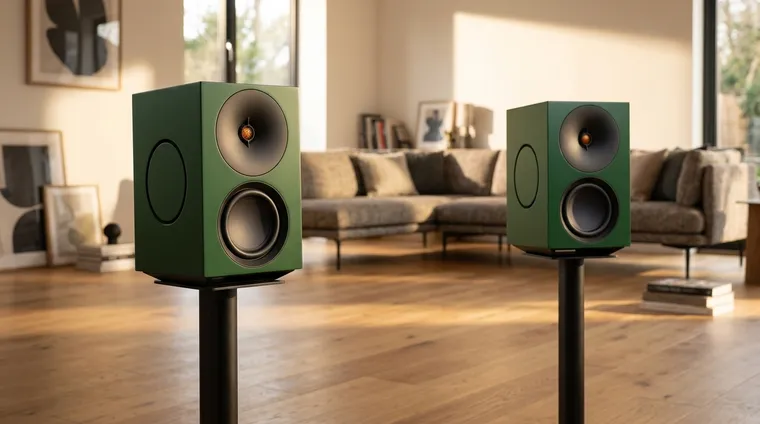
$2,399 Cambridge Audio L/R X with 400W per speaker, HDMI eARC, and a phono stage. Specs and what early reviewers heard; I have not heard these first-hand.
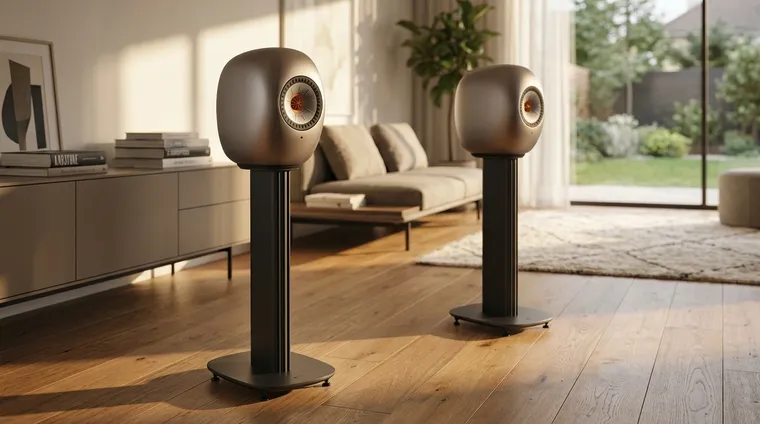
KEF LS LUXE is $3,999.99 a pair. Specs, how it compares on paper to the $5,999.99 LS60 Wireless, and why I think it is aimed at the room you actually live in. I have not heard them.