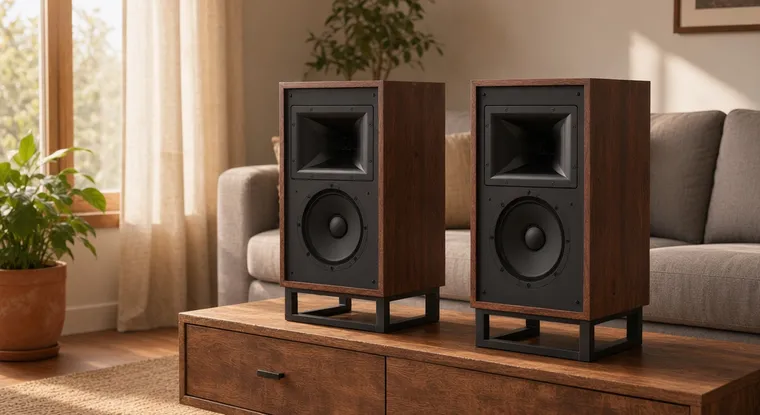
Klipsch Rebellion vs KEF LS50 Meta: What I'd Want to Hear
Klipsch's new Heritage bookshelf is 95 dB sensitive and $2,599 a pair. I own LS50 Metas, not Rebellions. Here are the specs, the amp question, and what I would actually listen for.
The LS50 Meta might be the most reviewed standmount of the decade. What gets said less often is how much amplifier it quietly demands. I own a pair, and finding the right amp has been less a purchase than an ongoing hunt. Here is where that search stands.
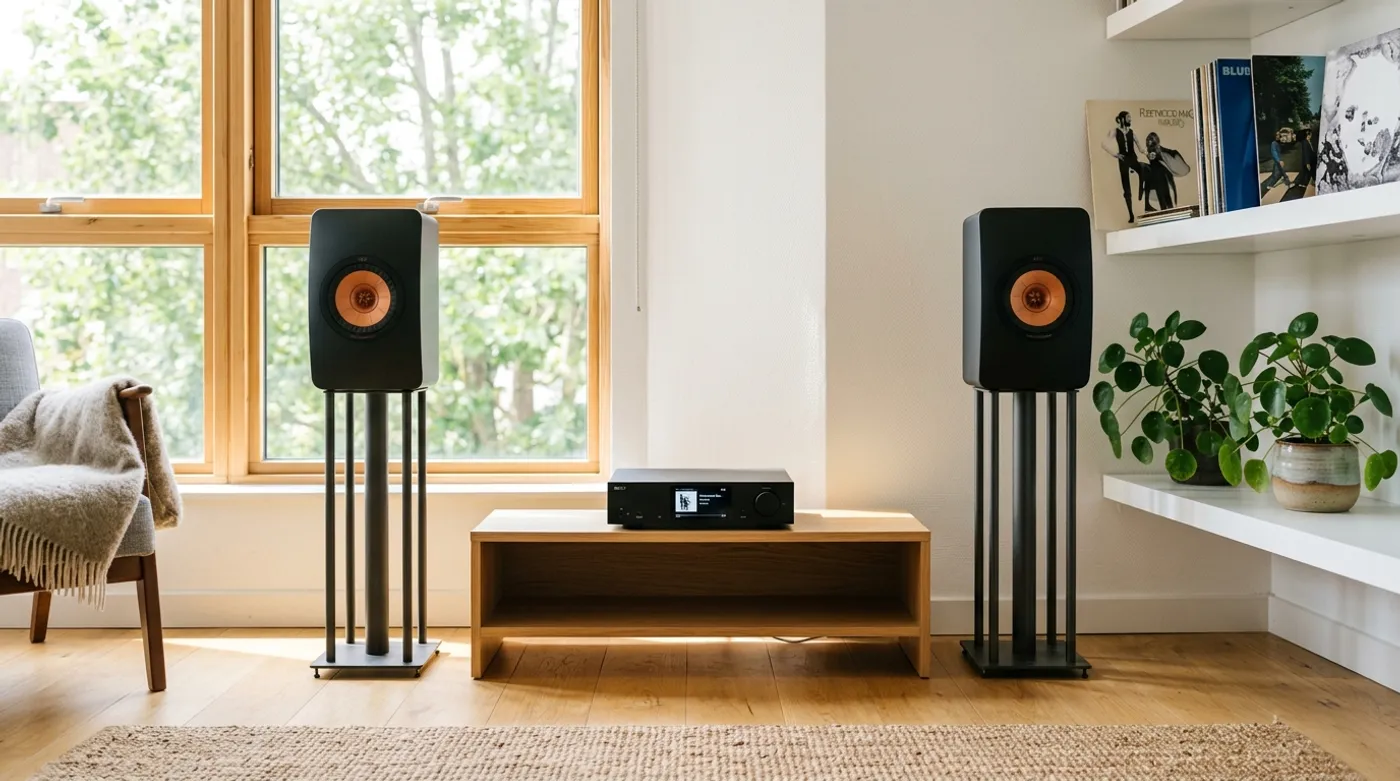
The KEF LS50 Meta might be the most reviewed standmount of the last decade, and for good reason. What gets said less often is how much amplifier it quietly demands. I own a pair, and finding the right amp for them has been less a single purchase than an ongoing hunt. This is where that search stands right now, honestly and unfinished.
Worth saying up front: KEF’s own answer to this problem is to sell you a speaker with the amplifier already inside, which is exactly what the LS LUXE does. And if you want this reasoning applied to your own system rather than mine, the gear advisor will do it in about thirty seconds. If you are early enough in the decision that you have not bought the speakers yet, that is a real fork in the road.
The number that reframes everything is sensitivity. The LS50 Meta sits at 85 dB, which is low. It is a nominal 8 ohm speaker, but the impedance dips to around 3.5 ohms in the bass, so it pulls real current exactly where the music demands it. KEF’s own guidance lands around 40 to 100 watts, but in practice the speaker keeps rewarding more current and more headroom than that range suggests, and a lot of owners settle on “100 watts per channel, ideally more” before it truly opens up at volume (HiFiVision discussion, KEF USA amp-pairing guide).
Translation: this is not a speaker you feed with the cheapest integrated on the shelf and forget. Underpower it and it sounds polite and closed-in, which is exactly how a genuinely great speaker picks up an unfair reputation for being thin or bright. It usually is not the speaker. It is the amp.
My current amplifier is the Naim Uniti Atom, which gives them 40 watts. I love the Atom as an object and as a streamer, but 40 watts is simply below what the LS50 Meta wants. It plays, and it images beautifully at moderate volume, but when the music asks for real dynamic slam or genuine level, I can hear the ceiling. That gap is the entire reason this search exists.
I have since tested that gap from the other direction, by dropping a 10 watt Chord Anni in the Atom’s place to hear what less power actually sounds like on these speakers. It was more listenable than the spec suggests, and it confirmed that presence is the thing that goes first.
Two things. First, power with current to spare, an amp that stays composed into that 3.5 ohm dip rather than clinging to its rating. Second, and this part is personal, I would like to collapse some boxes while I am at it. My rack is a streamer, a DAC, and an amp. If one well-built box could drive the KEFs properly and fold in streaming, a good DAC, and room correction, that is an upgrade to daily life, not just to sound.
This is the honest, unfinished part. I like what I have, but I keep circling back to a couple of candidates.
A few other integrateds drift in and out of the list, but those two are the ones I keep opening new tabs about.
Nowhere final, and I am at peace with that. I still enjoy what I have, and I would rather demo patiently than swap in a panic. If I had to bet today, the choice is between the Arcam SA45 if I want the no-compromise ceiling, and the NAD M10 V3 if I want most of the way there for a lot less money and a smaller box.
When I commit, I will update this piece rather than pretend I always knew. And if you drive LS50 Metas and have already found the amp that made them sing, I would genuinely like to hear what you landed on. This is a search, and I am still in it.
Klipsch's new Heritage bookshelf is 95 dB sensitive and $2,599 a pair. I own LS50 Metas, not Rebellions. Here are the specs, the amp question, and what I would actually listen for.
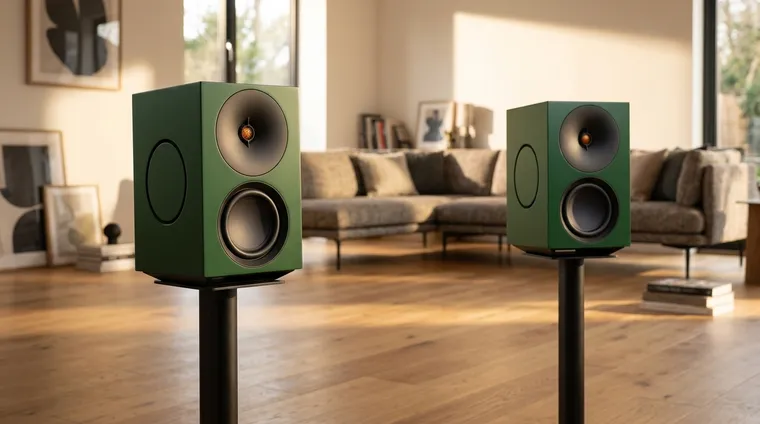
$2,399 Cambridge Audio L/R X with 400W per speaker, HDMI eARC, and a phono stage. Specs and what early reviewers heard; I have not heard these first-hand.
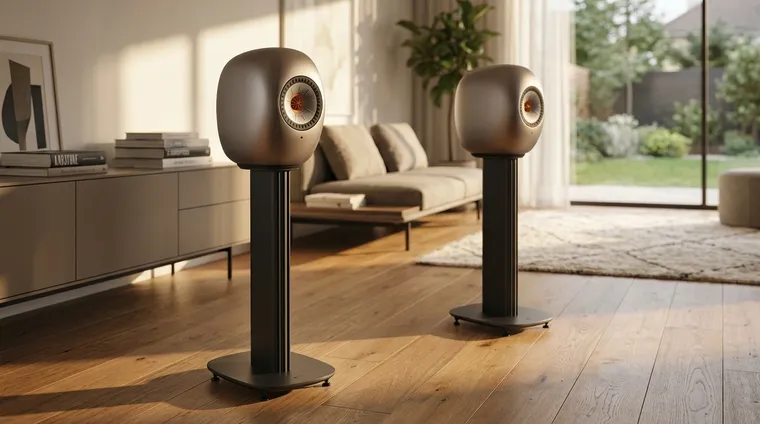
KEF LS LUXE is $3,999.99 a pair. Specs, how it compares on paper to the $5,999.99 LS60 Wireless, and why I think it is aimed at the room you actually live in. I have not heard them.