The problem I am actually trying to solve
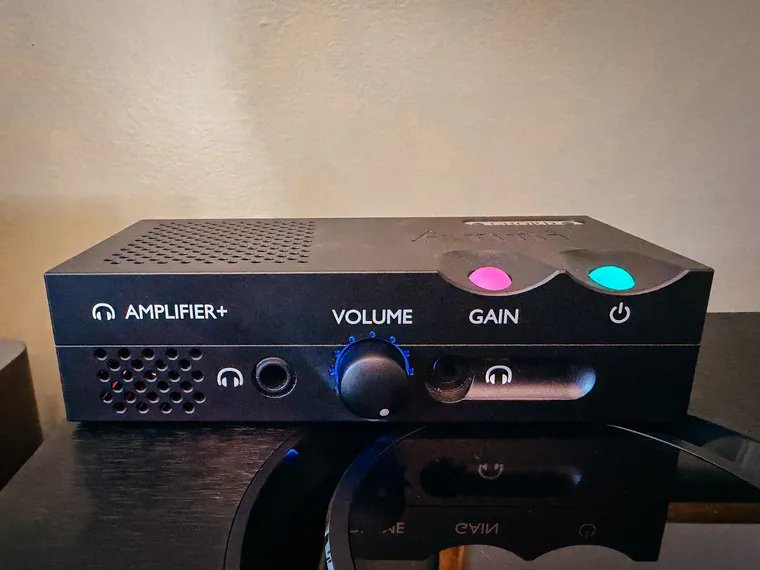
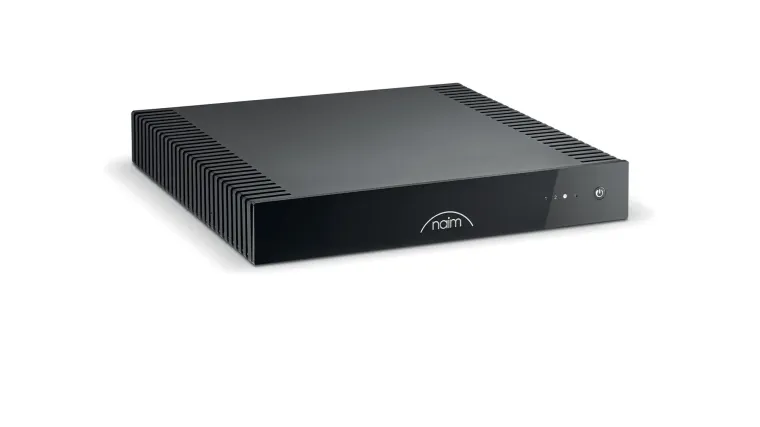
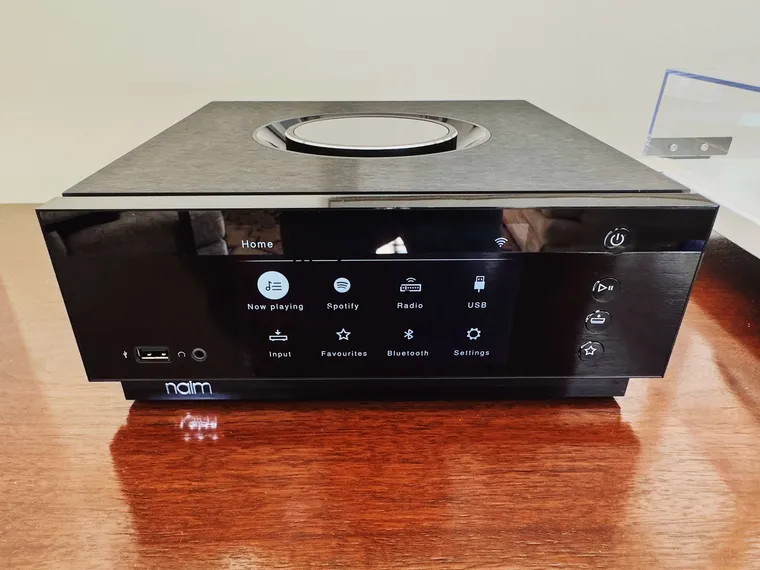
My current system is a three-box stack with a passive pair on the end:
It sounds lovely. It also has three power cables, two sets of interconnects, a DAC I bypass the Atom’s streaming for, and a streamer I bypass the WiiM’s DAC for. Every box is good at its job. The problem is the box count, and one nagging suspicion: the Naim Uniti Atom, at 40 watts per channel, is not the amplifier the LS50 Metas want.
So the question driving this whole piece is narrow and personal. Can one Arcam SA45 replace the WiiM, the Qutest, and the Atom, and do a better job of driving the KEFs than the Atom ever could? So I went at it from every angle I could find, the bench measurements, the long-term listeners, the value skeptics, and the people who would spend the money somewhere else entirely, instead of trusting one breathless first impression. Here is what I found.
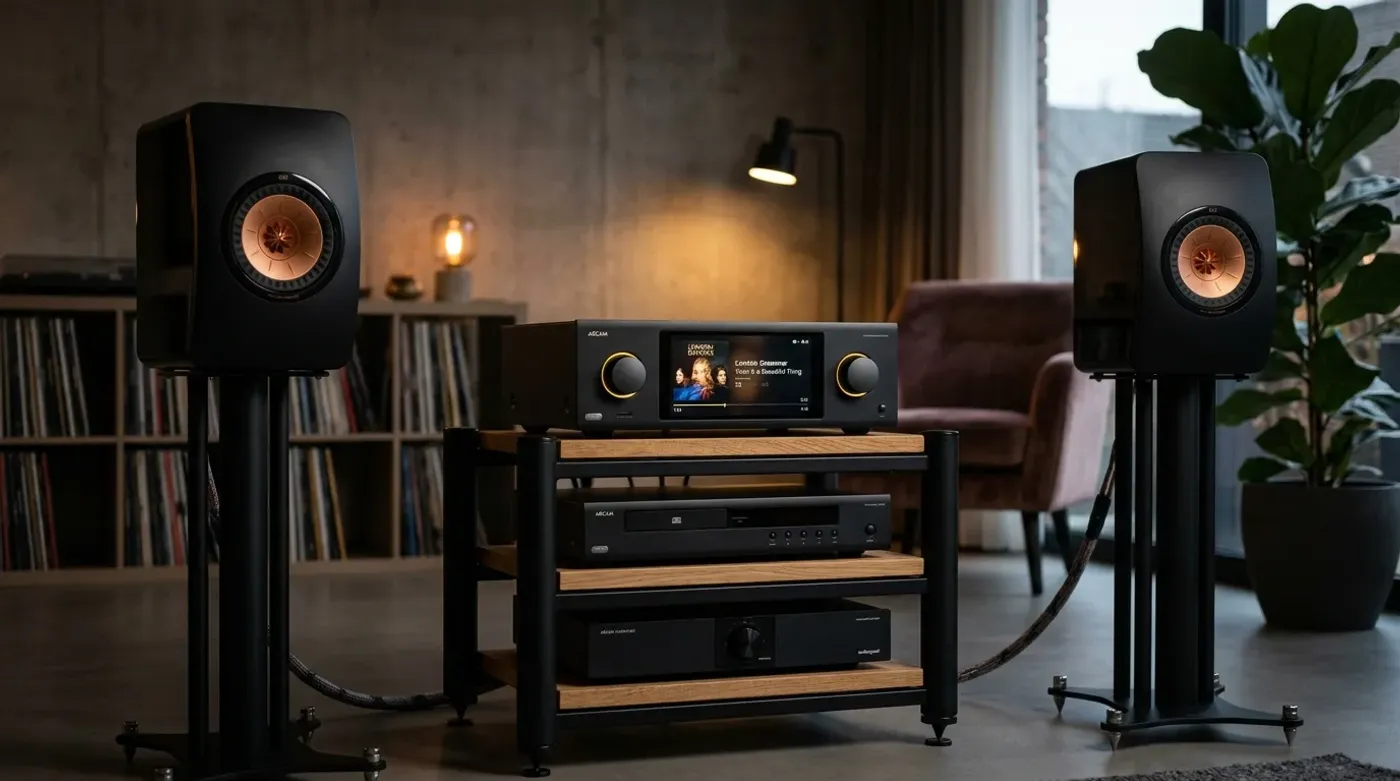
The LS50 Meta is a wonderful speaker and a slightly cruel one to amplify. It is rated at 85 dB sensitivity, which is low, and its nominal 8 ohm impedance dips to around 3.5 ohms in the bass. KEF’s own guidance lands around 40 to 100 watts, but the speaker rewards more current than that range suggests, and real-world advice clusters at “100 watts per channel and ideally more” if you want it to sing at volume (HiFiVision discussion, KEF USA amp-pairing guide).
The Naim Atom gives them 40 watts. That is the gap. So the SA45’s power story is not a spec-sheet flex for me, it is the entire reason this is interesting.
The power: Class G that measures like it costs more
The SA45 runs Arcam’s fifth-generation Class G amplification, rated 180 watts into 8 ohms and 300 watts into 4 ohms (Darko.Audio). Class G works by running off a lower voltage rail at normal listening levels and only pulling from a higher rail when a transient peak demands it, which Arcam says buys efficiency and lower distortion at the volumes you actually use.
Here is the part that matters. When Hi-Fi News put it on the bench, it beat its own rating: roughly 198 watts into 8 ohms and 323 watts into 4 ohms continuous, with dynamic headroom climbing to 255, 475, and 805 watts into 8, 4, and 2 ohm loads. Distortion measured between 0.0004 and 0.0009 percent across the rated power range, which they noted is more than ten times lower than Arcam’s own published figure (Hi-Fi News Lab Report).
For a speaker that dips to 3.5 ohms, that 2 ohm headroom number is the one I care about. This is an amplifier with current to spare for the LS50 Meta, not one clinging to its rating.
And, unusually, the listening notes agree with the bench. Reviewers describe real heft and grip, “above-average dynamic headroom,” and a top end that is “exciting without crossing into brightness,” holding composure even on revealing standmounts (Darko.Audio, HomeTheaterHifi). That dynamic authority is, by John Darko’s account, very much a product of the Class G topology rather than marketing gloss.
The consolidation: what actually collapses into one box
This is where the SA45 earns its keep for my situation specifically. It is not an amplifier with streaming bolted on, it is a genuine all-in-one:
- A complete streaming platform: AirPlay 2, Google Cast, Spotify Connect, Tidal Connect, Qobuz Connect, and Roon Ready, over Wi-Fi or Ethernet. That replaces what the WiiM Ultra does for me.
- A flagship-tier ESS Sabre ES9027 SPRO DAC in fully balanced configuration, PCM to 32-bit/384kHz and DSD512, on a six-layer board with a linear toroidal supply. That is the job my Chord Qutest does now.
- MM and MC phono inputs, an HDMI eARC port for the TV, balanced XLR plus three RCA line inputs, two optical, two coax, and separate pre-out and subwoofer outputs on both RCA and XLR (Darko.Audio, HomeTheaterHifi).
So three boxes become one, the interconnect spaghetti goes away, and the amplifier underneath it all jumps from 40 watts to a measured 198. On paper this is exactly the trade I have been circling.
Those dedicated subwoofer outputs matter to me too, because of the KC62. Worth knowing up front: both sub outputs carry the same full-range summed mono signal, not independent left and right, with no onboard crossover (Darko.Audio).
Room correction: Dirac Live, with friction
The SA45 ships with Dirac Live built in and a calibration mic in the box. If you have read my room tuning piece, you know I rate this highly, and the results here are the familiar Dirac wins: tighter soundstage focus, cleaner midrange, and useful taming of a low-bass resonance (Darko.Audio).
The honest catch is the setup. Arcam supplies essentially no Dirac documentation, the quick-start guide does not cover the real workflow, and a post-launch firmware update changed how the amp recognises subwoofers. Darko ended up calling on a Dirac specialist to get his 2.1 system reading correctly. Subwoofer integration in particular is manual: where a Lyngdorf with RoomPerfect automates it, the SA45 asks you to sort it by ear before you even measure (Darko.Audio). For a 2.1 system like mine with the KC62, that is a real consideration, not a footnote.
One nice touch the all-digital competition cannot match: the SA45 lets you keep analogue inputs fully in the analogue domain, bypassing the ADC and DSP entirely, if you want signal purity over correction.
Where it sits against the competition
At 5,499 US dollars (4,999 euros), this is flagship money, so the alternatives matter (Darko.Audio).
Against the Hegel H190, the SA45 has the stronger streaming spec and adds a phono stage Hegel omits. Sonically it is the “lean in” option to Hegel’s warmer “lean back,” biting a little harder in the upper mids and pulling ahead on micro-dynamic excitement (Darko.Audio). Against the Lyngdorf TDAI-3400, the Arcam sounds fuller and more dynamically arresting, while the Lyngdorf paves a far smoother path to room correction and subwoofer integration.
The uncomfortable counter-argument
The most valuable voice in any buying decision is the one arguing against it, and here it is John Darko himself. In his follow-up notes, his “where I would put the money” verdict is not the SA45 at all. He would pair an Arcam A50 Signature (2,800 euros) with an Eversolo T8 streamer (1,380 euros), get 300 watts of dual-mono Class G, a phono stage, a DAC, and HDMI eARC, and save almost a thousand euros versus the SA45 on its own, while preferring the Eversolo’s streaming and screen (I compared Eversolo’s DMP-A6 against the WiiM Ultra if you want the cheaper end of that argument) (Darko.Audio “8 more thoughts”).
The compromise in that route is room correction: the Eversolo’s EvoTune is not as effective as Dirac Live. So the counter-argument actually clarifies my decision rather than muddying it. If Dirac mattered less to me, the separates route wins on value. Because I run a sub in a real room and lean on correction, the SA45’s integrated Dirac is worth paying for. But it does turn this from a slam dunk into a genuine choice, and I would be doing you a disservice to pretend otherwise.
Two smaller annoyances reviewers flagged at this price, both of which would bug me daily: the gorgeous 8.8 inch screen renders artist and input text too small to read from the sofa, and the companion Radia app cannot even switch inputs, which most rivals’ apps can (Darko.Audio “8 more thoughts”). The volume knobs also feel a touch light for a five-grand box.
So, am I buying one?
For what I am trying to do, collapse three boxes into one and finally give the LS50 Metas an amplifier with current to spare, the SA45 is the most complete single answer I found. The measured power is real, the Dirac is the room correction I already trust, and the box count drops from three to one in a single move.
The thing stopping me from calling it a no-brainer is Darko’s separates argument and a price that asks you to really want the integrated Dirac. If I did not run a subwoofer in a treated-ish room, I would probably chase the A50 Signature plus Eversolo route and pocket the difference. Because I do, the SA45’s all-in-one room correction tips it.
Next step is ears, not spreadsheets. I want to hear the SA45 on the LS50 Metas with Dirac off first, to judge the raw Class G grip, then on, to see how cleanly it integrates the KC62. That is the one question no amount of research can answer for me, which is exactly how it should be.
Sources