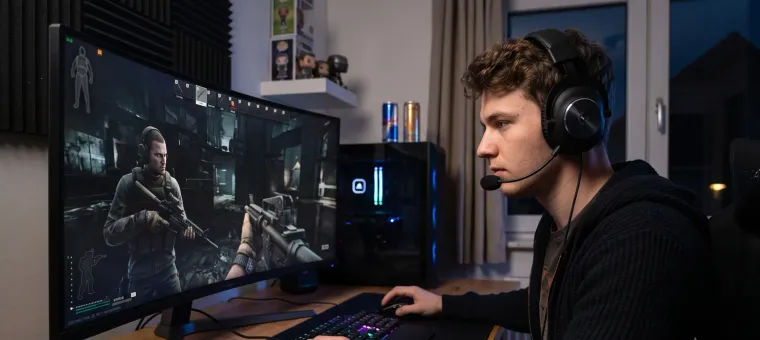
Best Escape From Tarkov Audio Settings: An Audiophile's Guide (2026)
The exact Tarkov audio settings that let you hear footsteps first: in-game, Windows, Binaural on or off, plus the headphones and DAC/amp that turn sound into a tactical edge.
Most gaming headsets sell you marketing and a microphone. For the two things that actually win rounds, soundstage and imaging, real headphones leave them behind. Here is what matters, and the models worth buying at every budget.
A quick note on how to read this: this is a buying guide, not a first-hand review of every model below. I have grouped the picks by the sonic traits that actually matter for gaming and flagged what each one is known for. Where a recommendation is first-hand, like the Beyerdynamic DT 1990 Pro I use for music, I say so. Everything else is an audiophile’s researched read on the field, not a claim that I have lived with all of them.
Sound in games is not just immersion, it is information. Hearing the rustle of leaves, the creak of a door, or the faintest footstep tells you where someone is before you can see them. In a competitive shooter that half-second is the difference between winning and respawning.
The problem is that most gaming headsets are built around marketing and a microphone, not sound quality. They lean on virtual surround and bass boost that smear the exact cues you are straining to hear. This is where real audiophile headphones pull ahead: they give you honest imaging and detail instead of processing piled on a mediocre driver.
Ignore the branding for a minute. Three things decide whether a headphone gives you an edge:
Notice what is missing: virtual surround, RGB, and “gaming” branding. None of it beats a genuinely good stereo headphone.
This is the first real decision, and it is about your room as much as your ears.
For pure competitive advantage in a quiet room, open-back wins. For everything else, a good closed-back is the pragmatic choice.
This is the question most people actually have, so here is the honest answer. For sound quality, a good pair of headphones beats a same-priced gaming headset almost every time, because the headset is spending your money on wireless, a mic, and features instead of the driver. The catch is obvious: headphones do not come with a microphone.
The fix is simple. Pair an open-back headphone with a clip-on boom mic like an Antlion ModMic, or a cheap desk USB mic, and you get better sound and a better mic than a headset, usually for less. That combination is my default recommendation for most people.
There is one exception worth naming: the Audeze Maxwell 2. It is a real planar magnetic headset with a broadcast-quality boom mic, low-latency wireless, and marathon battery life. It is the rare “gaming headset” an audiophile can happily live with, and the answer if you want one wireless box with a mic already attached (RTINGS). It replaced the original Maxwell in January 2026, which Audeze now lists as legacy; if you find first-generation stock discounted, it is still a good headset.
| Headphone | Type | Best for | Needs an amp? | Approx. price |
|---|---|---|---|---|
| Drop + Sennheiser PC38X | Open | Plug-and-play, built-in mic | No | ~$170 |
| Beyerdynamic DT 990 Pro / DT 900 Pro X | Open | Value imaging and detail | Yes / helps | ~$160 / ~$270 |
| Sennheiser HD 560S | Open | Value neutral imaging | Helps | ~$150 |
| Beyerdynamic DT 1990 Pro | Open | Analytical imaging (first-hand) | Yes | ~$350, MKII ~$700 |
| Meze 109 Pro | Open | Warm, detailed premium | Helps | ~$800 |
| Audeze Maxwell 2 | Closed (wireless) | Wireless, built-in mic | No | ~$330 |
| Beyerdynamic DT 1770 Pro | Closed | Endgame closed-back | Yes | ~$430, MKII ~$700 |
| Sennheiser HD 800 S | Open | Endgame imaging | Yes | ~$1,800 list |
Prices are US street, checked July 2026, and they drift. Beyerdynamic now sells MKII versions of both the 1990 and the 1770 alongside the originals, so check which generation you are buying before you click.
If you want one answer and no homework, this is it. It is an open-back tuned for gaming, with genuinely good imaging, a detachable boom mic, and impedance low enough to run straight off a controller or motherboard. Nothing else at the price gets you this close to “audiophile headphone plus proper mic” in a single purchase.
Both are open-back staples. The DT 990 Pro has a famously airy, treble-forward sound that makes footsteps and high-frequency cues pop, though the 250-ohm version really wants a headphone amp to come alive (the newer DT 900 Pro X is easier to drive). The HD 560S is the more neutral, even-handed alternative and is easier to run. Either one, plus a cheap clip-on mic, outperforms most gaming headsets twice the price (PC Gamer).
This is my first-hand pick. I bought the DT 1990 Pro for music, and it happens to be a superb gaming headphone for the same reason it is a great work tool: it is ruthlessly analytical, with precise imaging and a treble that surfaces fine detail. It genuinely wants a proper amp, and it is not the warm, forgiving choice, but if you want to hear everything, it delivers.
If the Beyer house sound is too bright for you, the Meze 109 Pro is the antidote: a beautifully built open-back with a warmer, more relaxed voice that still images well. The pick for people who play for hours and want detail without fatigue (Audio46).
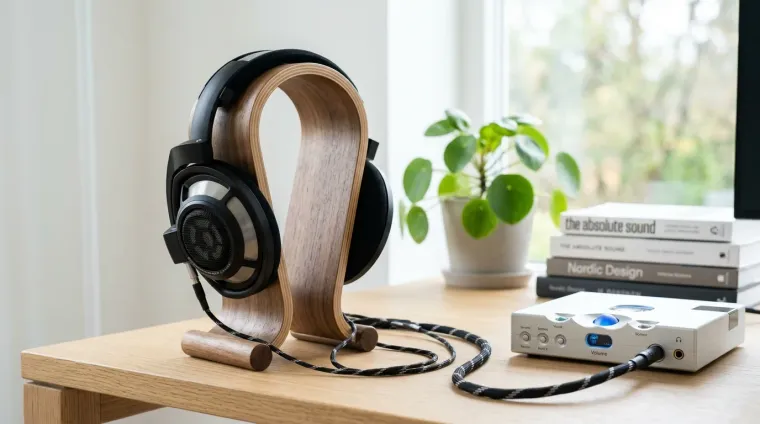
When budget stops being the constraint, these are the ceilings. The HD 800 S is the imaging benchmark; its enormous, holographic soundstage makes locating threats almost trivial, but it is expensive, unforgiving of bad sources, and demands a real amp. The DT 1770 Pro is the endgame closed-back for competitive play in a noisy space. Worth reading my take on what “endgame” even means before you spend here.
Sometimes. Easy-to-drive picks like the PC38X and Maxwell 2 are fine straight from your PC or controller. But higher-impedance open-backs, the 250-ohm DT 990 Pro, the DT 1990 Pro, the HD 800 S, only reach their full imaging and dynamics with a proper headphone amp behind them. The DT 1990 Pro is exactly this kind of headphone; underpowered, it never opens up.
If you want to understand what a DAC actually does before spending, my Chord Qutest review and Chord Mojo 2 review both walk through it, one desktop, one portable. Even a modest external DAC/amp beats most motherboard audio for noise floor and drive, which cleans up the quiet detail you are trying to hear. I started my own DAC journey with a Schiit Modi Multibit, a genuinely great budget option if you want to dip a toe in before spending Chord money.
Since most audiophile headphones do not include a microphone, this is the piece people forget. A clip-on boom mic like the Antlion ModMic attaches to any pair of headphones and usually sounds better than a headset’s built-in mic anyway. A desk USB mic (a Blue Yeti or similar) is the other easy route, and doubles for streaming. Either way, you end up with better sound and a better mic than an all-in-one headset for the same money (PC Gamer).
The best gaming audio setup for most people is not a “gaming headset” at all. It is a good open-back headphone, a cheap clip-on mic, and a modest amp if your headphone needs one. Start with the PC38X if you want simple, the DT 990 Pro or HD 560S if you want value with more upside, the Audeze Maxwell 2 if you want wireless with a mic built in, and only climb toward the HD 800 S when you genuinely cannot name what you would improve.
Then spend the rest of your energy on your in-game settings. If you play tactical shooters, that is where my Escape From Tarkov audio settings guide picks up.
The exact Tarkov audio settings that let you hear footsteps first: in-game, Windows, Binaural on or off, plus the headphones and DAC/amp that turn sound into a tactical edge.
"Endgame" headphones are the ones that finally stop the upgrade itch. Here's what actually makes a headphone endgame, and the models worth that title in 2026.