Bose Acquires McIntosh: A New Era for Audiophiles
Bose's McIntosh acquisition: a strategic move into the audiophile, Bose, McIntosh, and hi-fi market. Discover the impact on luxury audio.
Ask any audiophile about their endgame system and watch what happens. There's a pause. Maybe a small laugh. Then a carefully qualified answer about how they're "pretty much there", followed by a list of the two or three things they're still considering. Nobody's there. That's kind of the whole thing.
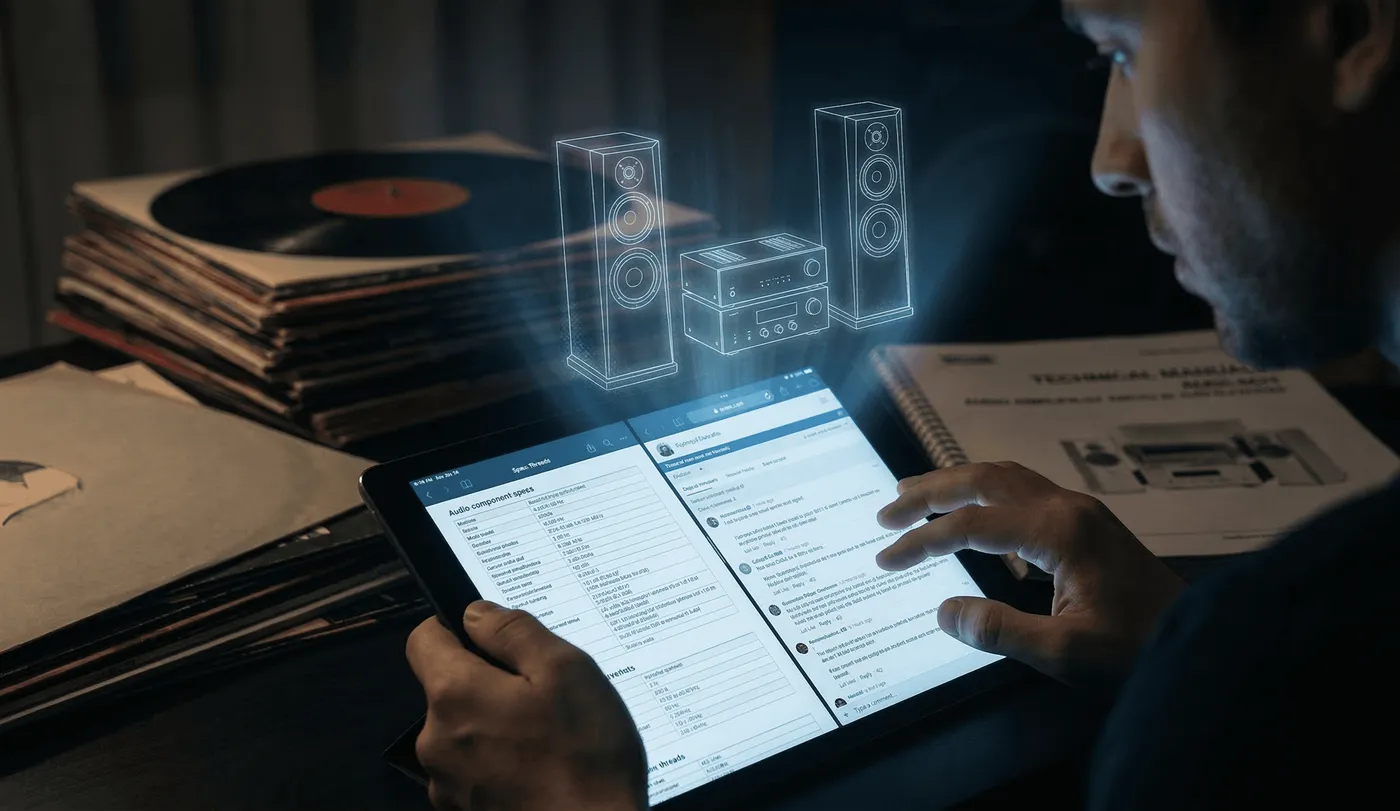
The endgame is always right around the corner. You can feel it. The next amp will have the control your current one lacks. The speakers you’re eyeing will finally get the imaging right. You do the research, read the reviews, watch every YouTube comparison you can find, and by the time the box arrives you’ve already convinced yourself this is the one.
And it might be great. Genuinely great. But a few months in, something else catches your eye, and the corner moves again.
This isn’t a bug in the hobby. It might be the feature.
The research phase, deep-diving into spec sheets at midnight, cross-referencing forum threads, building mental shortlists that you revise every week, is its own kind of pleasure. I am doing exactly this right now with a DIY Klipsch Cornwall build, and the research has already lasted longer than most of my actual purchases. Separate from listening. Separate from owning. It’s speculative and optimistic, and the gear in your imagination always sounds perfect because it has no room problems and costs you nothing yet.
Arrival rarely matches anticipation. Not because the gear is bad, but because the imagination had no noise floor, no room problems, no cables to sort out. The real thing is better in some ways and imperfect in others, and before long your brain has already started assembling a list of what it would change.
This isn’t a flaw. It’s probably what keeps the hobby alive.
Part of what makes the endgame so slippery is that the hobby itself keeps evolving under your feet.
Take where we are right now. A few years ago, getting genuinely high-quality audio into your home required serious investment, separates, careful matching, a steep learning curve. Then brands like WiiM started shipping streamers and all-in-one components at prices that would have seemed impossible for the performance on offer. Suddenly the entry point to “proper” hifi dropped dramatically. A novice who knows nothing about amplifier classes or impedance matching can now build a system that would have embarrassed mid-tier setups from a decade ago, for a few hundred dollars.
That changes the endgame calculation for everyone. If your benchmark for “good enough” keeps improving at the entry level, the ceiling has to rise too.
The top of the market is moving too, just less visibly. Bose buying McIntosh is the clearest recent sign that the brands people treat as fixed points are themselves in play.
Streaming followed a similar arc. The CD era gave us solid, reliable quality. Then streaming arrived and, for a while, compressed everything down to convenience at the cost of fidelity. It felt like a step backward. But Apple Music, Tidal, and Spotify have all moved to lossless and high-resolution tiers now. We’ve essentially returned to CD-quality as the baseline, and in many cases surpassed it, with the added benefit of near-infinite libraries. Better signal, less friction, available to anyone with a subscription.
Every time the floor rises, audiophiles recalibrate. What counted as endgame last year becomes the new starting point.
And yet.
Here’s the uncomfortable truth about the endgame: most of us don’t actually want to reach it.
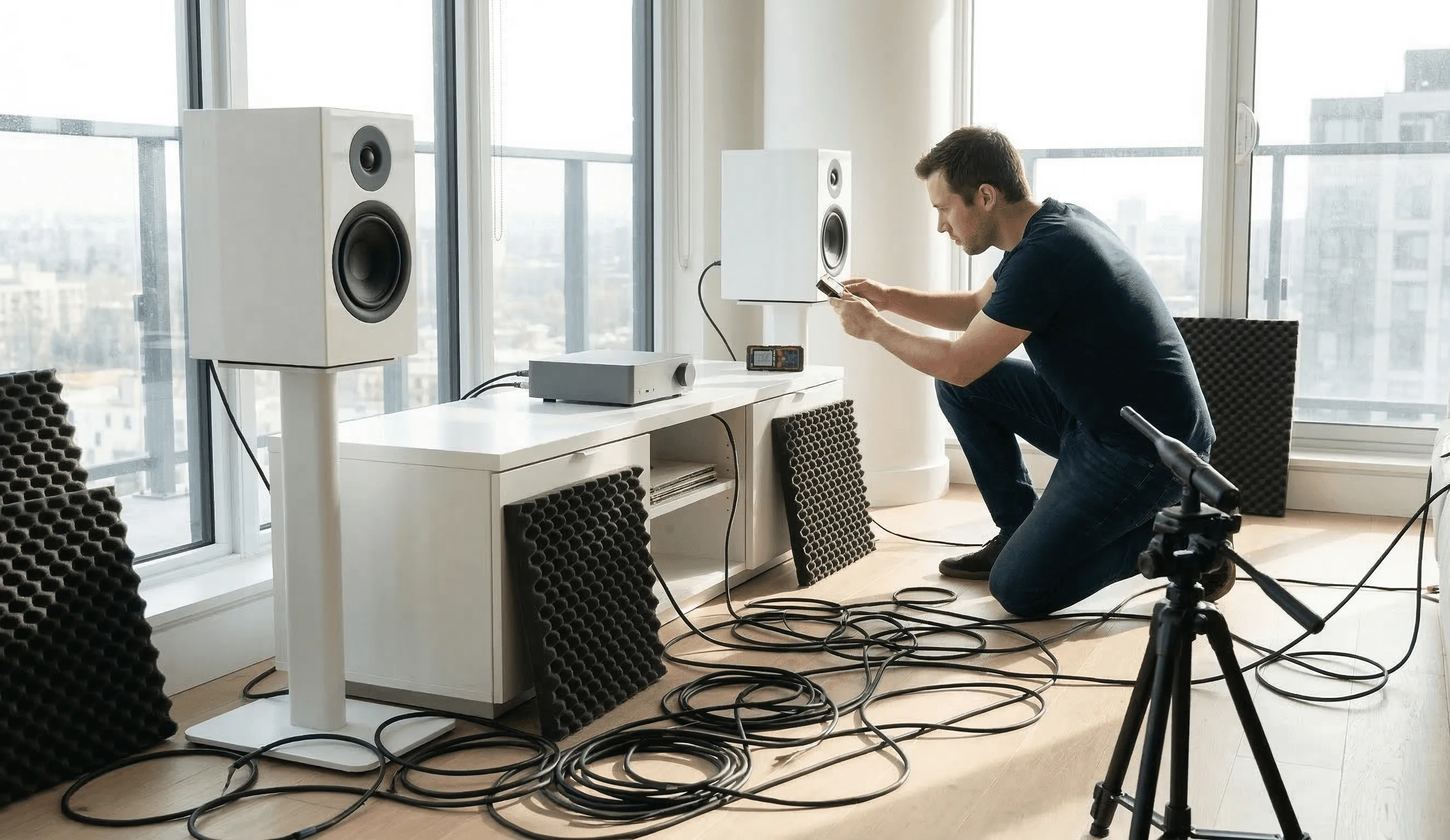
The more you know about audio, the more you understand how many things affect what you hear. Room acoustics. Speaker placement. The noise floor of your environment. Every variable you learn to control reveals two more you hadn’t considered. Knowledge expands the list of things that could theoretically be better.
The endgame recedes because knowledge expands.
That said, there’s a version of the hunt that costs you less, financially and emotionally.
The shift worth making is from chasing to choosing deliberately. Instead of buying what’s exciting right now, spend more time sitting with a decision. Map out what genuinely bothers you about your current system. Is it the soundstage? The bass control? The way vocals sit in the mix? Specific dissatisfactions lead to specific purchases that actually fix something, rather than just rearranging what you already have.
Buy things that have room to grow with you. A great pair of passive speakers, properly positioned, will outlast several rounds of electronics upgrades. A high-quality DAC doesn’t become obsolete the moment a new chip arrives.
And accept that some changes are coming regardless. Room correction technology, tools like Dirac Live and Audyssey, is improving fast enough that it will probably prompt an upgrade cycle of its own in the next few years. That’s not a reason to delay every decision. It’s a reason to hold each purchase a little more lightly.
There’s no certificate. But after enough cycles, I’ve learned to spot the signs that someone has actually arrived, or gotten close enough that the gap stops mattering.
None of this requires a specific budget. My Chord Qutest ended my DAC search not because it’s the most expensive converter I could have bought, but because it made the question stop being interesting. The same logic applies to endgame headphones: the right pair isn’t the priciest one, it’s the one that finally quiets the itch. That’s what endgame actually feels like, not the top of the mountain, but the moment you stop looking up.
The name of this site isn’t accidental. Endgame is the destination everyone in this hobby talks about, works toward, and never quite reaches, and that might be exactly right.
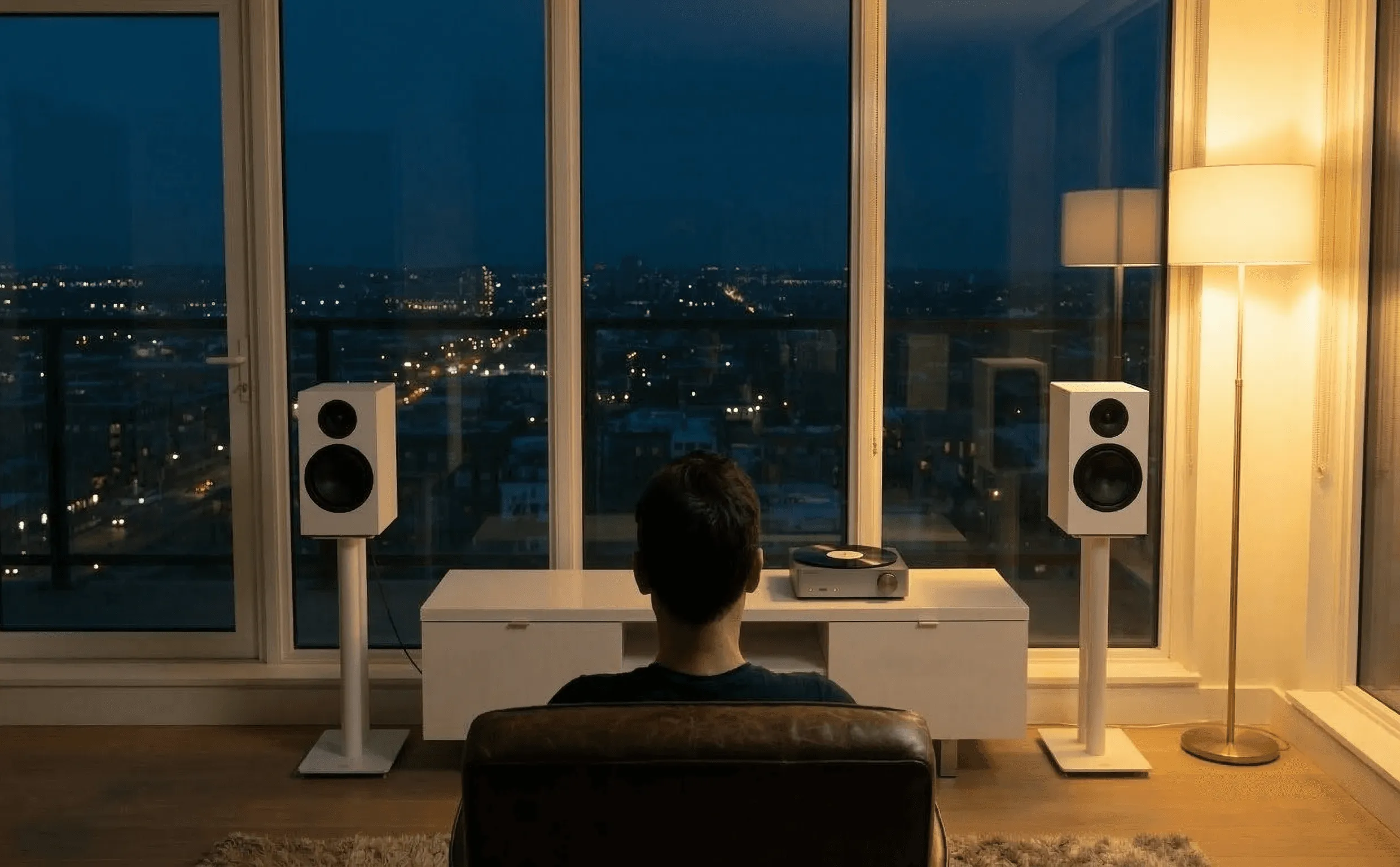
Because the real endgame isn’t a system. It’s a moment. It’s the album you’ve heard a hundred times suddenly revealing a detail you never caught. It’s a late evening where the room is quiet and what’s coming out of your speakers is so right that you stop thinking about gear entirely.
That moment is available at almost any level of the hobby now, thanks to everything that’s changed in the last few years. The equipment is better and cheaper than it has ever been. The source material is there.
The endgame is less about what you own and more about how often you actually sit down and listen.
It’s always been right around the corner. Maybe that’s fine.